

10 Phantom Rooms has already built a strong footprint in the NKS ecosystem. Now, they’re expanding that connection with RSI 2, a new instrument built exclusively for NKS. Made from two of Berlin’s rarest synths, RSI 2 brings processed samples from the Jomox SunSyn and the Resonator Neuronium into a focused creative tool for modern producers.
We spoke with Tobias about the ideas behind the instrument, the team’s ongoing design philosophy, and what’s coming next for 10 Phantom Rooms.
Jump to these sections
- How the SunSyn and Resonator Neuronium shaped the RSI 2 concept
- From rare hardware to a flexible Kontakt instrument
- Serving film and media composers
- A philosophy shaped by decades of sound design
- Why real-time control sits at the core of every 10 Phantom Rooms instrument
- Looking ahead to 2026 releases
Discover these rare sounds for yourself.
What inspired you to combine the SunSyn and Resonator Neuronium, and how does this unlikely pairing shape the sound of RSI 2?
I have owned the Sunsyn for many years. This is, in my opinion, one of the most unique and edgy-sounding analog synthesizers ever built. Also, there were only about 200 units ever made.
I bought a Resonator Neuronium about two years ago with serial number 65. After that, I thought: why not combine both synths into one software instrument? Both have a very unique palette of sounds, and combining both in a software format was so much fun to do. It resulted in many futuristic sounds you’ve never heard before.

Beyond the meticulous sampling, what are the most significant features that you and the 10 Phantom Rooms team added to this Kontakt release to make it a tool for modern composers?
Our main goal was never to emulate those synths in a sampled instrument, but rather to capture as many multi-samples – including filter movements, feedback loops, etc. – as possible.
We also went the extra mile to resample that material again and again, through outboard gear like modular walls, stompboxes, vintage reverb machines, and more.
I think the huge pool of samples is a very strong foundation for this instrument. Then that’s being “multiplied” with the onboard features like layering or sequencing, for example.

How did you design RSI 2 to offer quick, inspiring sound shaping for film and media composers as well as other producers?
We believe that every producer wants to use inspiring and production-ready instruments with unique real-time features. That’s not just for film and media composers. Producers and composers both want an instrument that allows them to shape every preset to their needs without deep diving into loads of subpages and menus.
I think this works very well with RSI 2, and it’s part of our general design philosophy.
Across your work, including Crosstalk Modular and the Low End series, what core design philosophy or aesthetic guides 10 Phantom Rooms’ creation process?
Our key philosophy is to combine instruments and studio techniques with a real-time performance-oriented interface. We also make deep customization features, but with an easy learning curve.
A good example of this is the “ABC morphing,” which 10 Phantom Rooms have been offering since our very first instrument. With this feature, users can seamlessly morph three sound settings for a total sound change – all with a simple modwheel turn.
What exciting new projects or instrument concepts can we look forward to from 10 Phantom Rooms in the near future?
The next instruments are almost ready, and they will be released in the first quarter of 2026. What I can share with you already is that those next instruments are in the Crosstalk and Modular Rhythm series. Stay tuned.
Closing thoughts
RSI 2 adds a distinct new voice to the 10 Phantom Rooms catalog and strengthens their place within the NKS community.
In this release, they’ve paired more rare hardware with a performance-focused workflow and continue to offer tools that feel immediate and creative for a wide range of producers. We’re excited to welcome RSI 2 to the lineup as an NKS exclusive and look forward to what the team brings next.
Related articles
-

NI producer spotlight: Women’s History Month 2026
Discover more than 30 women and nonbinary producers – including WondaGurl, Arca, and Tems – who are defining the modern…
-
Learn how Andre Samuel and Daylight kept Mon Rovîa’s Bloodline sounding natural and clean
Learn how production duo Daylight and Andre Samuel used iZotope RX and Native Instruments tools to capture the organic soul…
-

5 of the best vocal plugins for modern music production
Unlock the power of the human voice. Explore five distinct vocal plugins designed to bring emotion and character to every…
-
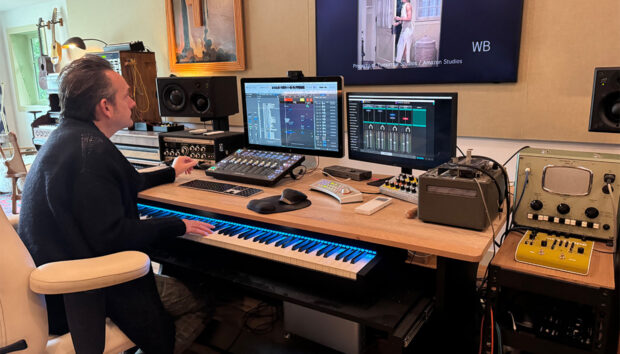
Speed, melody, and instinct: Will Bates on composing for streaming with Kontakt
Will Bates explains how Noire and Kontakt helped him score 'The Better Sister' with speed, emotion, and precision for Prime…
-
Best drum synths for electronic music
Discover the best drum synth VST plugins for electronic music. From professional sound design in Massive X to creative layering…
-
Richie Hawtin: deconstructing the dancefloor with Traktor
Go behind the scenes with Richie Hawtin to see how he uses Traktor, analog mixing, and live sequencing to create…
-

How Nova Wolf finds humanity in loudness with Ozone
Nova Wolf explains how iZotope Ozone helped him master Nomad Tapes: Africa with warmth, emotion, and cohesion, balancing intensity with…
-
How DJ T-1000 keeps Detroit hands-on with Maschine
DJ T-1000 explains how Maschine fuels his Detroit-driven workflow, bringing focus, rhythm, and hardware energy to his new EP Ghosthack.