
Composer and multi-instrumentalist Will Bates has built a career on finding tension between emotion and precision. His latest work for The Better Sister, an eight-episode thriller streaming on Prime Video, continues that balance. The score moves through haunting pianos, layered percussion, and textured orchestration, creating a sound that feels both intimate and unrelenting.
Working under tight deadlines, Bates relied heavily on his trusted Native Instruments plugin toolkit to shape the show’s melodic and rhythmic world. Using Noire for its dynamic response and Kontakt for its versatility, he was able to move quickly from sketches to finished cues while preserving the raw emotion of his ideas. That speed was crucial for a project that demanded fully realized compositions in a matter of days.
Jump to these sections:
- Writing fast under pressure
- Using Noire to capture emotion
- Staying creative on tight deadlines
- Building rhythm and texture
- Relying on Kontakt for consistency
- Why speed defines the modern composer
Discover why Noire and Kontakt helped Bates write fast, stay creative, and keep up with the rapid pace of modern streaming production.
With The Better Sister, you’re writing for an eight-episode thriller. How important was speed in being able to turn ideas into fully realized cues?
Working on a show always requires a certain amount of discipline to get everything completed and approved before the final mix. That first phase tends to be the most pressure, when the melodies and the overall tone of the show are still forming.

With The Better Sister, there was an unusually short period of time between the spotting session (where we discuss each cue and how it’s functioning) and the final mix for each episode. Particularly at the start.
As we got a few episodes in, the time crunch was easier – by then, we had a shared language, and the roadmap of themes started to coalesce. To me, that’s the most important step in a project. Music is such an abstract thing to talk about. It becomes a lot easier when there are specific pieces to point to and themes to consider connecting to a character.
You’ve said Noire is your go-to when you need to get melodies and chords down fast. How did it help you set the emotional tone for this score?
I really like the way Noire feels when building out chord sequences and melodies. I find it very expressive. I tend to have a really hard compressor on it when I’m writing to make it almost overly responsive. At my main studio, I have a 19th-century upright with a felt that’s always over the strings. It tends to be the instrument that I first sit in front of when trying to come up with stuff.

The wonky tactile mechanics of real instruments have always been very important to me.
When I have that “eureka” moment and find the melody I’m searching for, I quickly switch over to my Noire signal chain at the rig and play it through Logic to make sure I capture the MIDI. That’s mainly so I don’t forget it.

That tended to be the process with The Better Sister at the start of writing. But I also found Noire so useful for shaping chords around a theme. I had to alter the context for a lot of the melodies throughout this show, and using Noire to search for those different colors was always my go-to.
TV and streaming projects move fast. What’s your process for staying creative under pressure?
Honestly, I love the speed of it. I’ve always been a fast composer and enjoy that kind of pace. If things stretch out for longer periods, I tend to drive everyone around me crazy.

I guess it can sometimes be daunting after a spotting session to see an empty DAW session with all my markers showing pending cues. The key is to find ways to bypass that fear.

I start by sketching something for every cue, even if it’s just a tone or a few notes, or an instrument choice. Sometimes it’s just adding text in the marker as a reminder to try opening a different session that may have an idea in it that could work. Then I move on to the next cue until I get to the end of the show.
Then I go back to the beginning and develop those ideas, get to the end, and loop back. I do that until everything is finessed.
Once I’m mid-season, I love the intensity of it and becoming an expert in the emotional landscape. Once I have those themes and I’m in a bit of a groove, I love the process of spotting using my own themes – incorporating little fragments of ideas that could reappear later. Honestly, this stuff ends up becoming so subliminal, I’m probably the only one noticing it. But I think that kind of attention to detail can subtly seep into the audience’s subconscious.
When you’re starting a score, how do texture and rhythm begin to take shape in those early sessions?
I tend to write a lot when I first get started. Sometimes away from visuals, sometimes responding to a specific scene or character. But it’s very loose at first. Everything starts out as a kind of soup of textures and fragments of melodies. They all live in one or two crazy big sessions.

Then I’ll start to focus on a couple of those sketches and apply them to the picture. From there, the instrumentation of subsequent cues takes shape, and new ideas are born. But those big, messy sketch sessions tend to be the ones that I return to later on, once other melodies and ideas are fully formed. I’ll even open those sessions up if I get stumped with a certain cue for a new character.

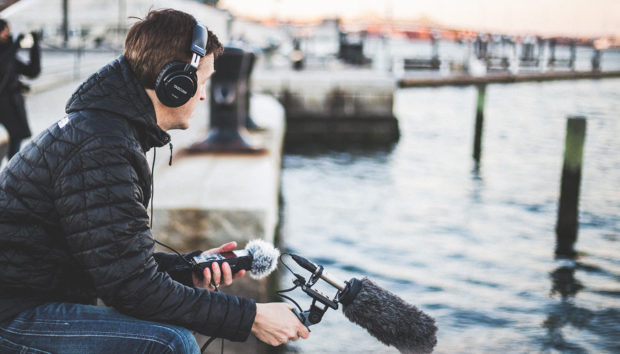
On The Better Sister, one such sketch session was made out of recordings I made with percussionist Spencer Cohen. We snuck into the building site next door with a laptop and a couple of condensers. I had him play brushes, mallets, and sticks on steel girders – different rhythms in multiple tempos. Adding those rhythms to other, more tonal sketch sessions made building the rhythmic cues very fast and efficient.
When you’re working on multiple projects at once, how important is it to have a consistent, reliable tool like Kontakt?
There are always those sounds that I need to access quickly when I’m in the middle of writing. There’s nothing worse than losing flow in the middle of an idea. I’m a little impatient in the studio and very impulsive. So I need all my gear (both analog and digital) to be operating flawlessly, otherwise I’ll get needlessly distracted by some silly tech problem. Then the spark will probably go. It’s all about limiting what Mike Rutherford once described to me as “MIDI Hell.”

So I have my Kontakt libraries saved within channel strips in Logic. Some I have categorized in instrumental groups, but most of them are categorized within folders for specific projects. I might think, “Those flautando strings I used in The Magicians Season 3 could be good here,” or “I need that sub hit from Another Earth here.”
I find it easier to remember stuff that way. And because Kontakt has been around for so long, I can quickly access a Swedish Key Harp sample library that I may have used on an indie movie 15 years ago. Then I can easily tweak it a bit and use it on something new.
If another composer asked you why speed matters in streaming scoring, how would you sum it up in one line?
You have to keep moving forward. There’s nothing worse than getting bogged down and stuck when there’s a looming deadline.

Wrapping it all up
Will Bates has always worked at the intersection of pressure and inspiration.
His score for The Better Sister reflects that rhythm perfectly. It’s built around strong melodic writing, fast decisions, and the expressive feel of tools like Noire. Each cue feels connected by intention, shaped by instinct, and refined through a process designed for speed without losing sensitivity.
Kontakt remains central to Bates’ toolkit. It allows him to pull from decades of sound libraries and evolve them across projects, keeping his music cohesive while adapting to new stories and worlds. That continuity gives his scores their depth and identity, and it shows how technology can serve a composer’s emotional range when used thoughtfully.
Related articles
-
Best drum synths for electronic music
Discover the best drum synth VST plugins for electronic music. From professional sound design in Massive X to creative layering…
-
Richie Hawtin: deconstructing the dancefloor with Traktor
Go behind the scenes with Richie Hawtin to see how he uses Traktor, analog mixing, and live sequencing to create…
-
How Nova Wolf finds humanity in loudness with Ozone
Nova Wolf explains how iZotope Ozone helped him master Nomad Tapes: Africa with warmth, emotion, and cohesion, balancing intensity with…
-
How DJ T-1000 keeps Detroit hands-on with Maschine
DJ T-1000 explains how Maschine fuels his Detroit-driven workflow, bringing focus, rhythm, and hardware energy to his new EP Ghosthack.
-
Inside the spectral world of Oscillarys: a deep dive with Ocean Swift Synthesis
From Eurorack loops to vintage vocals: Ocean Swift shares how they built Oscillarys for motion and why they’ve moved fully…
-

DNKLE turns emotion into energy with Pharlight
DNKLE details how Pharlight helped him turn raw intensity into controlled soundscaping on his latest single, “Pressure,” from GITA Recordings.
-

Behind the bounce of Millennium Hip Hop: a conversation with Snipe Young
Get production tips from GRAMMY-winner Snipe Young. Discover how to capture the legendary Virginia Beach sound with the new Millennium…
-
Marco Polo on crafting the ultimate boom bap drum instrument
Legendary producer Marco Polo discusses the creation of his new Play Series instrument, translating three decades of hip hop into…