





SHIMA’s debut album, Welcome to SHIMAJIMA, captures a rare balance between tradition and modern production. Born in Tokyo and now based in Los Angeles, she’s built her sound around cultural memory, storytelling, and field recordings that blur the line between heritage and digital experimentation. The record moves fluidly between koto lines built in Kontakt, taiko drum recordings from Japanese festivals, and ambient textures shaped to feel both traditional and immediate.
At the very center of Welcome To SHIMAJIMA is SHIMA’s reflection on curiosity about where sound comes from. Kontakt plays a central role in that process, giving her access to instruments she might never have in front of her physically while allowing her to reshape those tones into something new.
Jump to these sections:
- Building traditional sounds in a digital space
- Turning field recordings into playable instruments
- Using Kontakt for sampled versions of traditional instruments
- Representing heritage through modern tools
- Finding identity in unique sample libraries
Get access to the same immaculately sampled traditional instruments in Spotlight Collection: East Asia.
On Welcome to SHIMAJIMA, you pull directly from Japanese traditions like Awa Odori. How did Kontakt help you bring those raw recordings into your production process?
None of the koto or shamisen you hear on Welcome to SHIMAJIMA are actual recordings or samples. They are all MIDI tracks I made using Kontakt’s Spotlight Collection: East Asia library. I love that library because it gives me so much control over articulations and expressions like pitch bends and glissandos.
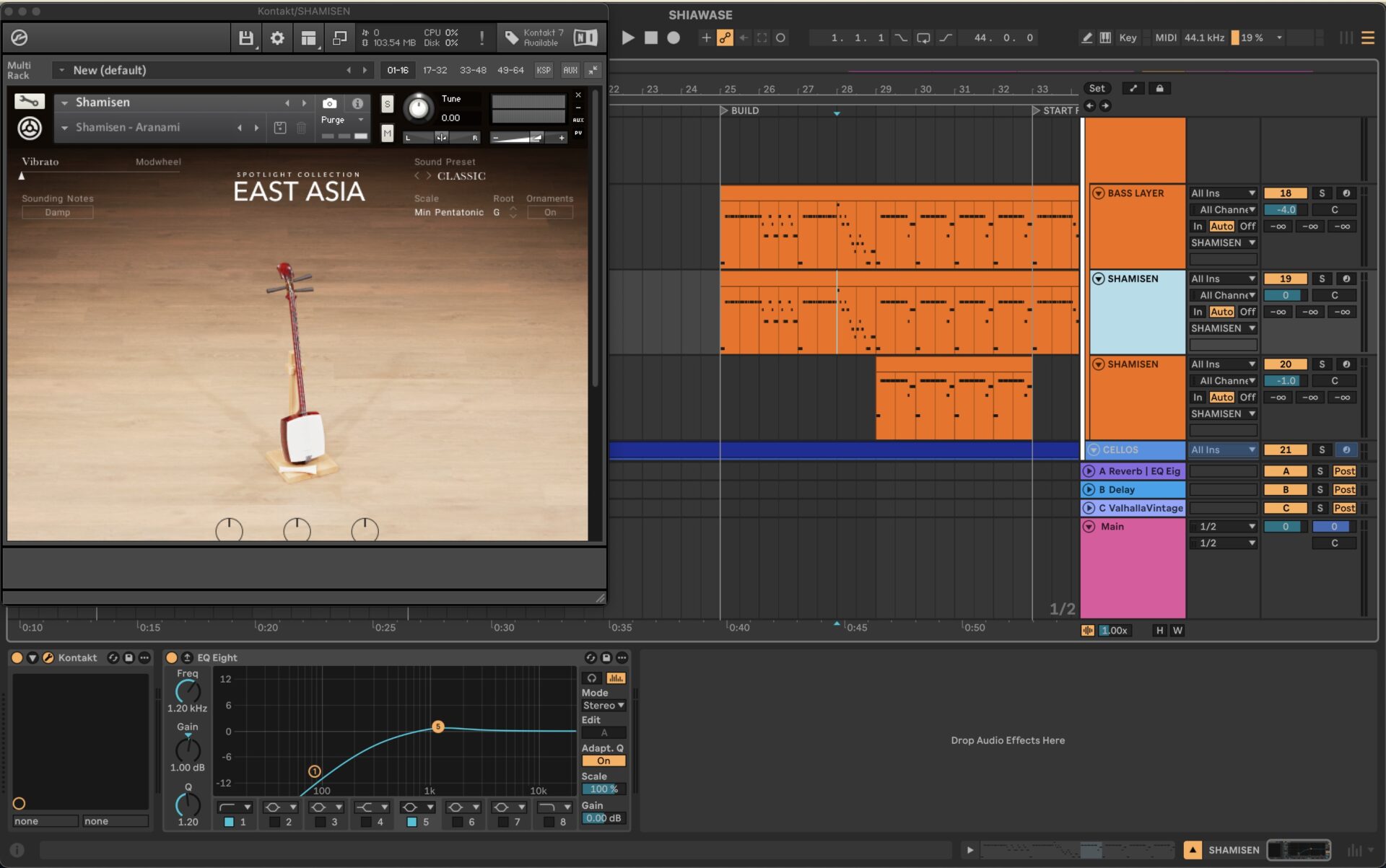
Kotos are massive, expensive instruments with very few players worldwide. It is not as common as the guitar, so it is not easy to find authentic recordings. I am very grateful to have a tool like Kontakt, which lets me capture sounds I would not otherwise have access to.
I’d like to work with real koto players in the future, but even then, I’d probably still use Kontakt at least to create the demo track that I would show to the koto player as a reference.
Pro tip from SHIMA: When using your phone’s voice memos for field recordings, always remember to get two of whatever you’re capturing if you want a stereo field, as voice memos are mono.
What was the workflow like when you sampled festival chants, flutes, and taiko drums and mapped them into Kontakt?
I use my phone to capture field recordings, which obviously is not the best quality, but I often degrade the recordings later to get a vintage or retro sample feel. That works perfectly. Festivals have a lot of background noise, so I usually clean that up first, then find small snippets that make good one-shots or loops.

Most traditional music is not in 4/4, so the loops usually need some manual quantizing and timing adjustments. From there, I export the individual samples and load them into my custom instrument, which already has the effects and settings I want for phone recordings.
Pro tip from SHIMA: Try to name and trim your recordings on the spot so you don’t have to sort through them later.
Do you think using Kontakt gives you more flexibility to integrate heritage without being locked into rigid “world music” tropes?
Absolutely.
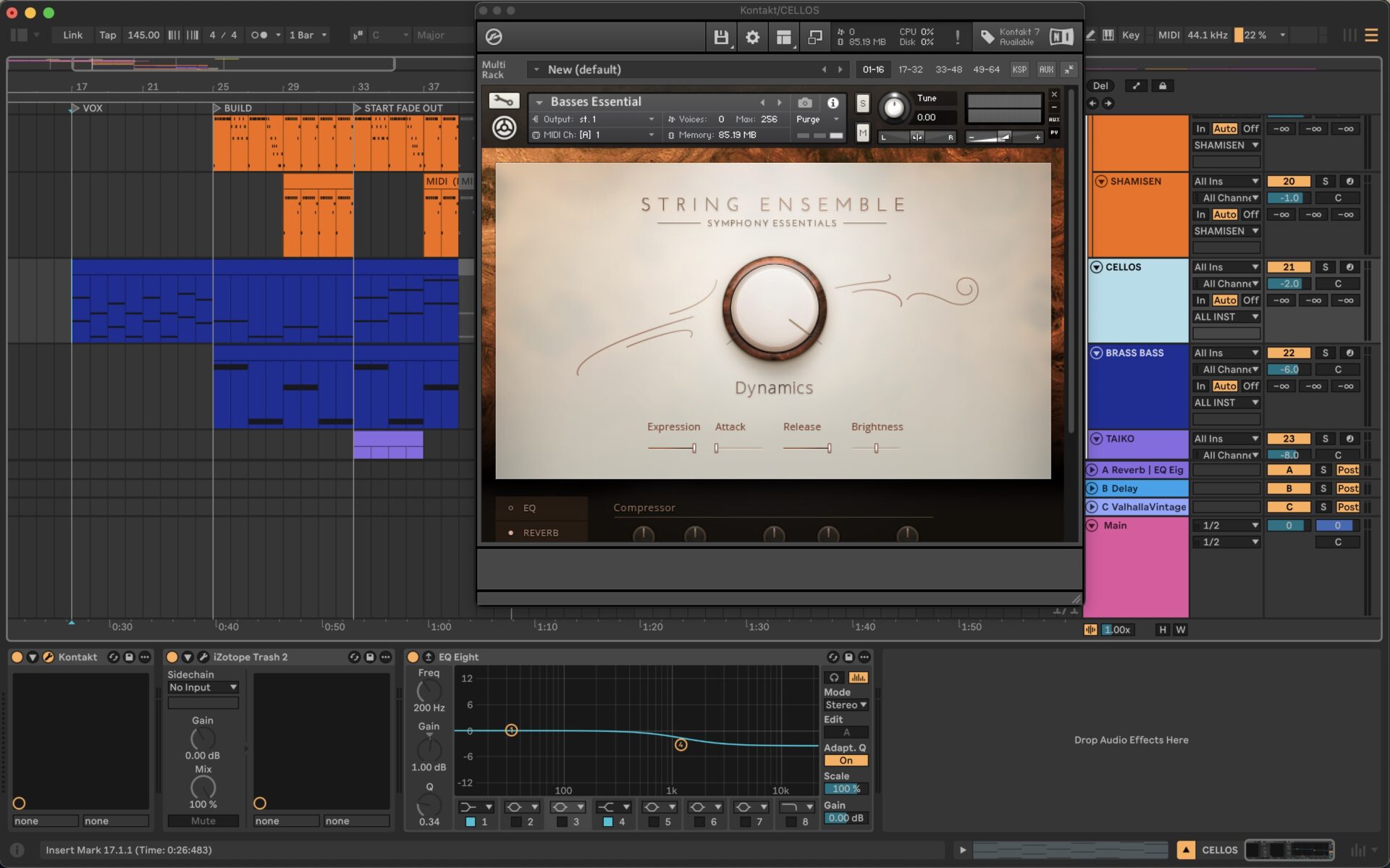
Most traditional music, including Japanese folk music, doesn’t have Western music scales or time signatures, so it requires some manipulation to fit into contemporary music. Tools like Kontakt allow me to capture the essence of traditional music without straying so far that it sounds confusing or unrelatable to a modern audience.
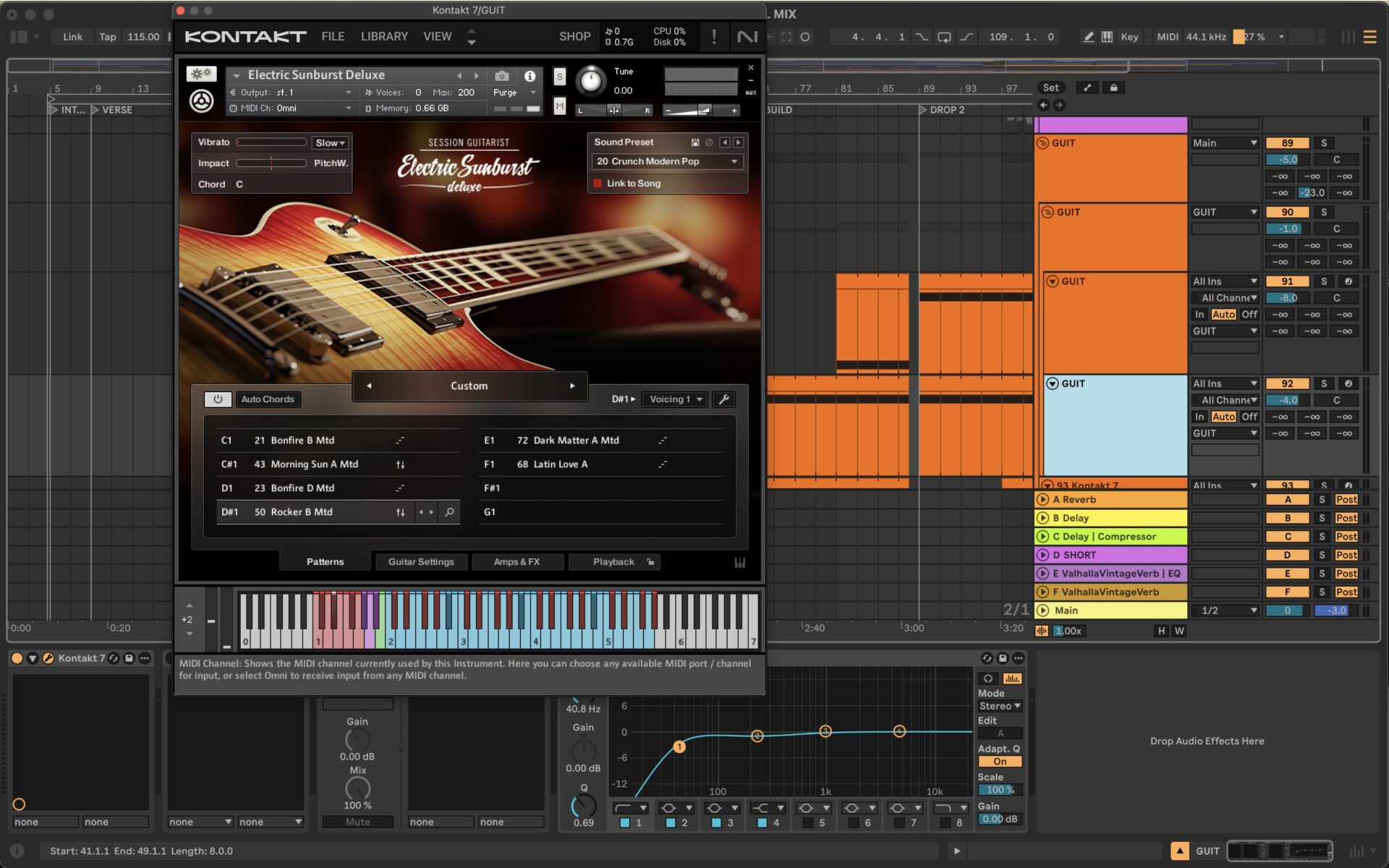
Pro tip from SHIMA: Don’t worry too much about getting the cleanest or most high-quality recordings. Oftentimes, those imperfections can add character and life to EDM tracks that could otherwise sound sterile.
What advice would you give other producers who want to start building Kontakt instruments from their own field recordings?
Definitely do it.
It will give you such an edge and unique identity as a producer, because nobody else will have the same sample as you. Although EDM is obviously a modern genre, dance music (as in music that is made for dancing) has existed everywhere for all of human history.

So there are infinite sources of inspiration, even in your own heritage and culture, that you may not have even considered.
Pro tip from SHIMA: Experiment with different instruments and sounds. Instead of a violin, try using an erhu. Instead of a tom, try using a tabla drum. This can make your sound design stand out and help you find your own unique style.
Looking back, how central was Kontakt to making Welcome to SHIMAJIMA feel like a personal but globally accessible record?
It was totally central.
Welcome to SHIMAJIMA would not exist without Kontakt. I’m a bedroom producer making world music from my bedroom. Without these Kontakt libraries giving me access to global instruments from West Africa, East Asia, or the Middle East, I would not be able to do that.
Pro tip from SHIMA: Use granular effects and other time-based effects to turn simple melodies into big ambient soundscapes.
Wrapping it all up
SHIMA’s approach shows how modern tools can open space for cultural expression rather than replacing it. Welcome to SHIMAJIMA uses Kontakt as a bridge between tradition and experimentation, letting her translate lived experience into a sound that feels relevant and human.
Each song connects the intimacy of field recordings with the precision of digital production. It’s a project that redefines what global music can sound like, and a clear example of how curiosity and technology can work together to tell a personal story.
Related articles
-

Junaco on DIY recording, Sonic Ranch, and the subtle power of RX
Junaco share how RX helped shape In Motion, keeping the album’s warmth and intimacy intact while refining every detail of…
-

Inside Oli Julian’s rhythmic approach to Netflix’s The Twits
Oli Julian breaks down how Abbey Road Vintage Drummer helped him score Netflix’s The Twits with rhythm, humor, and personality.
-

Hilit Kolet shares how she uses Komplete Kontrol to capture her raw energy
Hilit Kolet shares how Komplete Kontrol helps her stay creative and capture the raw energy behind Transatlantic Kiki with The…
-

Why Massive still defines Sensu’s bass sound
Sensu discusses Pure Motion, the emotional depth behind her basslines, and why Massive remains a core part of her creative…
-

Mux Mool on Maschine, Opal Drums, and the future of live electronic performance
Mux Mool explains how Maschine drives the sound and performance of Opal Drums, bridging studio precision and live energy with…
-

How to flip samples like the top 1% of producers
In this blog, you’ll learn sample flipping techniques for your music production workflow, all with tools in the Native Instruments…
-
The best music production software from Native Instruments
Discover the best music production software for creating, mixing, and mastering your music, including free tools and pro plugins from…
-
Absynth 6 Preset Explorer: where AI meets musical intuition
Discover how Absynth 6 Preset Explorer uses AI to organize sound by timbre, revealing creative relationships and putting human authorship…