



Orchestral sampling has come a long way from the early days of rigid, dry sample blocks. For over two decades, ProjectSAM has been at the forefront of this evolution, pioneering an ensemble-recording philosophy that brought the natural, breathing acoustic space of a hall straight into composers’ studios. With their groundbreaking Lineage Series now expanding from percussion into strings, we caught up with the team to discuss their core philosophy, how NKS (Native Kontrol Standard) is transforming accessibility, and how intelligent features are reshaping the day-to-day workflow of modern composers.
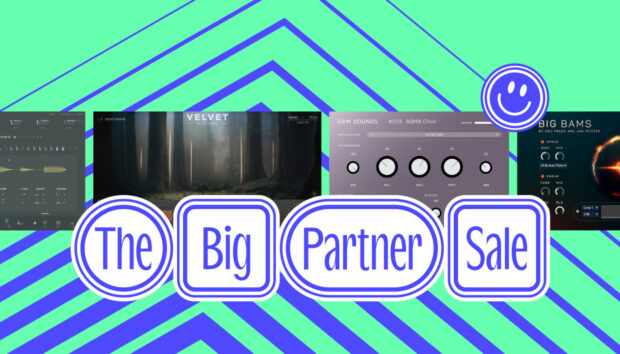
Even better, you can currently bring these world-class orchestral textures into your own setup. The Big Partner Sale is happening right now at Native Instruments. It is your chance to save big on hundreds of NKS instruments, samples, and bundles made for your hardware by top developers – including ProjectSAM. Don’t wait, because these offers end June 30.
Read on to discover how ProjectSAM continues to bridge the gap between traditional orchestration and next-generation instrument design, including their latest instrument – Lineage Strings.
What core philosophy has stayed the same since the days of Symphobia or True Strike, and what has changed the most about your approach?
What has remained constant since we started ProjectSAM in 2001 is our absolute focus on sound quality and articulations. Back then, industry-leading libraries were primarily recorded with close microphones, meaning you had to drench them in reverb to achieve a realistic orchestral sound. We felt differently. We believed capturing the natural acoustic perspective of an orchestra from a distance would create a much more convincing experience. We recorded a free proof of concept with local conservatory players, and the response nearly crashed our school’s server.
What has changed most dramatically is software development, user interface design, and social media. In the early days, you hardly needed a GUI. Products like SAM Horns were simply collections of presets for GigaSampler and Kontakt, and supporting multiple physical DVD installation formats was a buggy challenge. Today, modern libraries demand extensive coding, scripting, and UI design. Since 2008, we have focused exclusively on Kontakt, and Lineage Strings is our first library developed entirely for Kontakt 8. Focusing on a single platform allows us to dedicate all our energy to delivering the best possible sound and musical experience.

How does the NKS framework change how you design an instrument’s interface, and how do you leverage features like the Light Guide?
NKS has made us much more aware of the accessibility of our features. Pre-NKS, our focus was entirely on a mouse-driven interface. While anyone could play the instruments on a keyboard, the plethora of options and controls were basically inaccessible to the blind and visually impaired community.
NKS, and NKS2 in particular, completely changed this. For Lineage Strings and Lineage Percussion, the visual controls and NKS layout were designed simultaneously to offer full parity. Because of the advanced features in Lineage Strings, we faced unique challenges with the Light Guide. For example, with Smart Lookahead delay enabled, do you light the keys when pressed or when the samples are actually triggered? Our active beta testing group was instrumental in helping us iron out these details.

What sparked the creation of the Lineage line, and how does the recording environment shape its identity?
We wanted to develop a range of instruments that expand and complement the Symphobia universe with highly playable orchestral sections. While Symphobia focuses on pre-orchestrated ensembles and cinematic combinations, Lineage follows a more traditional orchestral approach by offering individual sections and greater flexibility in orchestration. The two lines complement each other perfectly, allowing you to move seamlessly between instant inspiration and detailed orchestral writing. We’ve carried Symphobia‘s core ease of use and speed into the Lineage series, combining realism and playability in a traditional layout.

Can you explain how Adaptive Phrasing (with Smart Lookahead) and Intelligent Arranging work under the hood?
For Pandora and Lineage Percussion, we developed Adaptive Sync to intelligently match recorded rolls and swells to your note lengths. With Adaptive Phrasing, we are extending this to almost all recorded articulations. Using the Smart Lookahead delay, the Lineage Strings engine detects the difference between a sustained note, a tenuto, or a staccato, automatically switching to the best fitting articulation. It can even identify grace notes and trills, letting you focus entirely on the music instead of constant keyswitching.
The Arranger module is a different beast altogether. It takes your chords and intelligently distributes them among the five string sections by detecting inversions, root keys, and slash chords. It is a fantastic, out-of-the-box orchestration tool that lets you quickly record realistic string accompaniments, either fully automated or by assigning voices to specific sections manually.

As virtual instruments become increasingly intelligent, where do you see the industry heading?
It is still difficult to predict how far machine learning will take virtual instruments. One main challenge is that machine learning does not naturally align with real-time, low-latency performance. To select the most appropriate articulation for a musical phrase, an engine needs a small amount of look-ahead time. Introducing a delay of a few hundred milliseconds allows the engine to analyze the incoming MIDI sequence and make an informed decision.
While these systems will become faster and smarter, an instrument cannot truly see into the future; it can only make decisions based on the information it has already received. Because of this, it might produce a musically convincing result, but not necessarily the exact phrasing you intended. Ultimately, we see AI and machine learning as powerful assistants rather than replacements. They will help streamline your workflow and reduce technical complexity, but composers will always value direct control over the nuances that make a performance truly expressive.

Start using immersive orchestral sampling in your music
From their pioneering early multi-mic recordings to the intuitive, accessibility-first NKS integration in Kontakt 8, ProjectSAM continues to redefine how composers interact with the virtual orchestra. By balancing cutting-edge assistant features like Adaptive Phrasing with the organic sonics of traditional orchestration, the Lineage Series ensures that technology always serves your creative flow rather than hindering it.
Head over to the Native Instruments Online Shop before June 30 to check out the Big Partner Sale, grab your copies of ProjectSAM’s legendary libraries, and start bringing these intelligent, cinematic textures into your own tracks today.
Related articles
-
Behind the synth: A. G. Cook on stacked sawtooths and the creation of Super*Saw
Explore the extremes of stacked sawtooth waves with Super*Saw, a new synthesizer co-created with A. G. Cook. Learn how to…
-

How New Constellations turn emotion into sound with Massive X
Go inside the studio with New Constellations. Learn how they use Native Instruments gear, happy accidents, and lifelong friendship to…
-

Citizen Kain on building emotion and space with Replika
Citizen Kain explains how Replika helped shape the rhythm, tension, and emotion behind his debut Eversun Records single “Moments.”…
-

The organic precision behind Calcou’s Anjuna release featuring Reaktor
Calcou shares how Reaktor, Monark, and Super 8 shaped the creative balance and live energy behind their new duo EP,…
-
14 NKS instruments that will change the way you create music
Discover 14 NKS instruments to freshen up your workflow. From lo-fi tape synths to cinematic strings, shop the Native Instruments…
-
Parallelle on crafting living basslines with Reaktor and TRK-01
Parallelle share how Reaktor and TRK-01 shape the bass and warmth in 11th Avenue, balancing analog depth with modern control.
-
Where will your sound lead you? Explore the Native Instruments Summer Sale
Save 30% on instruments, effects, and sounds in our Summer Sale. Find the tools to keep your tracks moving and…
-

How Mr. Bill builds sonic worlds in Massive X
Mr. Bill explains how Massive X and instinctive sound design shaped the storytelling process behind his new downtempo album, Mr.