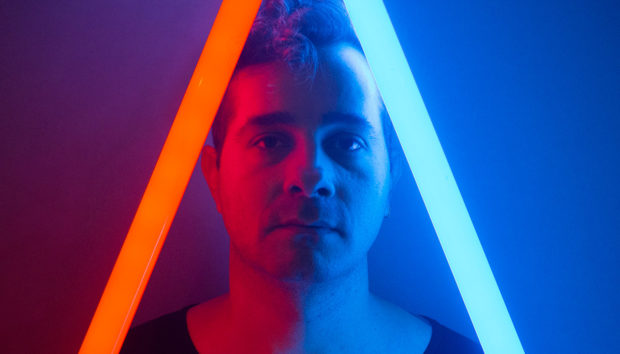
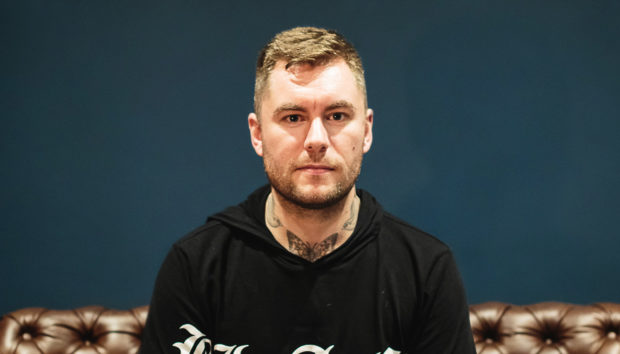



Legendary electronic music innovator Richie Hawtin sat down with Native Instruments’ Michael Koczynksi (Lead Product Manager for Traktor) and Sylwia Kopys (Senior Marketing Manager for Traktor and hardware) at ADE 2025 to discuss a long history of collaboration, the evolution of his live setup, and his vision for the future of performance technology.
Watch the conversation in full below or read about some of the highlights in the blog.
Where it all started
The conversation began with the early days of digital DJing, a story that traces back to the late ’90s. Hawtin recalled stumbling upon Final Scratch, one of the original Digital Vinyl Systems (DVS), developed by Dutch programmers.
“It blew our minds when we saw the technology of how you could control an MP3 with a piece of vinyl. We didn’t believe it until we saw it… and the moment we saw it, we kind of saw the future.”
Hawtin and his partner, John Acquaviva, saw such promise in the technology that they famously invested in the software, effectively destroying their own record-pressing business to jump into the digital realm. The collaboration with Native Instruments solidified around this shared vision: that digital DJing was the future, even when CDJs were dismissed by the scene.
The Traktor X1 prototype and the need to break boundaries
A pivotal moment in the partnership was the development of the Traktor Kontrol X1. Michael, who helped design the first X1, reminisced about his nervous visit to Hawtin’s Berlin apartment to present the prototype. Hawtin’s reaction wasn’t to accept the design as-is, but to immediately see its potential beyond the initial factory mapping.
“I love label makers,” Hawtin quipped, describing how he quickly got his label maker out and relabeled buttons all over the prototype.
Despite the early prototype being “shaky” and prone to crashing, Hawtin took the risk, deciding to use it in his live sets immediately, months before its official release. For Hawtin, testing new gear is like testing a new record: you have a feeling it’s great, and the only way to know for sure is to try it in front of a crowd.
What drives him? The constant fascination with the interface. “It wasn’t only the sounds of the 909 that I liked. It was the interface that you could manipulate sound really quickly, intuitively,” he explained. That same philosophy guides his search for DJ tech – an interface that can quickly translate the idea in his head into sound.
Hawtin’s hybrid DJ setup
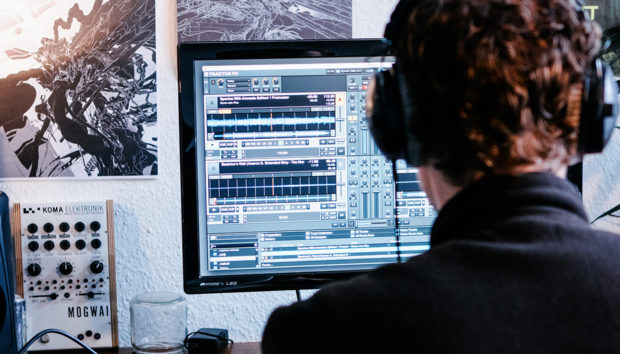
Hawtin’s current studio setup is a masterclass in hybrid performance, blending the best of analog and digital.

- Traktor is running four decks and simple effects, essentially mimicking the function of the 100 kilos of vinyl he used to carry.
- Bitwig runs in the background, adding an extra layer of drums and effects, similar to the 909s and effects he once brought on the road.
- Launchpad uses a custom script to control drums and other elements within Bitwig.
- Allen & Heath K2s control both Traktor and Bitwig parameters.
- The Model 1 analog mixer is central: audio comes from Traktor into the analog mixer, and the mixer’s effect sends loop back into the computer for effects, creating a unique sound and feedback loop.
- A foot pedal (controlling delay and effects) acts as his “third hand.”
Despite the complexity, Hawtin sees limitations as “good,” forcing a necessary balance. His current challenge is accessing new features like stem separation more fluidly. While he can currently use a second layer of K2s, he wants new controllers to give him more dedicated access, allowing him to use Stems separation in collaboration with EQ, perhaps even making it more important than EQ in the future.
He’s also constantly battling screens. Hawtin has a second, lower monitor to minimize the visual barrier between him and the audience, a connection he values greatly. He noted that the feedback of a physical knob is still paramount over a slippery touchscreen, and in a whimsical thought, even suggested contact lenses could be a future display method.
Beyond the booth: Deck FX and the future
Hawtin spoke passionately about the “invisible parts” of his work, which, for him, involves minimal preparation. He prioritizes spontaneity and an ability to explore on the fly, typically going from 20,000 promos down to 60 “fire” tracks that he plays out for the first time in front of a crowd.
More important than his own preparation, however, is his deep commitment to supporting the music and the producers. He’s been a vocal supporter of initiatives like Aslice and famously created the RADR program (formerly Twitter DJ). This program automatically posts the track and artist name of the music he is playing to social channels.
“If there was a union of DJs, if you weren’t doing that, you should be thrown out… You should not be able to DJ if you do not support the people making the music that you play. And not even, I’m not talking about financially. Give people credit.”
This ethos is central to his large-scale visual show, Deck FX, where the names of the producers whose music he is playing are projected alongside him, making them co-stars of the performance.

Richie’s advice for aspiring DJs
To those wanting to become accomplished DJs, Hawtin stresses patience and authenticity. In a world that demands instant, visually driven success, he stresses the long game.
“Find what makes you happy, what turns you on, what makes you excited to play and go for that. And, I think that doesn’t mean it’s always going to be successful right away, but in the long term, I think you’ll have more success or at least more happiness.”
The evolution of DJing in the next 10 years
Looking ahead, Hawtin is excited by the potential of AI assistance in live performance. Not for it to take over, but to provide real-time analysis and options – like having a producer’s newly recorded track pop up as a suggestion because it’s in the same key. He envisions a collaborative evolution:
“I think we can and will have more access to all that stuff in real time… Why can’t that pop up and say, ‘Hey, this was just being done or actually is being recorded right now,’ and pre-listen to it and throw that in, and then even do a live jam?”
Wrapping it all up
Richie Hawtin’s journey, from destroying a vinyl business to embracing complex hybrid performance setups, is a testament to his vision that technology should enable a new style of DJing and help performers lose themselves in front of people and go on a trip together.
He constantly pushes the envelope, not for technology’s sake, but for the sake of finding the most intuitive interface to translate creative ideas into sound, all while fiercely championing the music creators who make the entire scene possible.
We hope you’re inspired by our conversation with Richie. Channel your creativity into DJ sets made with Traktor today.
Related articles
-
Behind the synth: A. G. Cook on stacked sawtooths and the creation of Super*Saw
Explore the extremes of stacked sawtooth waves with Super*Saw, a new synthesizer co-created with A. G. Cook. Learn how to…
-

Inside the evolution of orchestral sampling: an interview with ProjectSAM
Discover how ProjectSAM’s Lineage Series uses NKS and smart features to change orchestral sampling. Plus, save on instruments in our…
-

How New Constellations turn emotion into sound with Massive X
Go inside the studio with New Constellations. Learn how they use Native Instruments gear, happy accidents, and lifelong friendship to…
-
Citizen Kain on building emotion and space with Replika
Citizen Kain explains how Replika helped shape the rhythm, tension, and emotion behind his debut Eversun Records single “Moments.”…
-

The organic precision behind Calcou’s Anjuna release featuring Reaktor
Calcou shares how Reaktor, Monark, and Super 8 shaped the creative balance and live energy behind their new duo EP,…
-
14 NKS instruments that will change the way you create music
Discover 14 NKS instruments to freshen up your workflow. From lo-fi tape synths to cinematic strings, shop the Native Instruments…
-
Parallelle on crafting living basslines with Reaktor and TRK-01
Parallelle share how Reaktor and TRK-01 shape the bass and warmth in 11th Avenue, balancing analog depth with modern control.
-
Where will your sound lead you? Explore the Native Instruments Summer Sale
Save 30% on instruments, effects, and sounds in our Summer Sale. Find the tools to keep your tracks moving and…