





Fifteen years is a long time for any label to stay relevant, but for Perspectives Digital, it has been a journey built on consistency, precision, and emotional depth.
Founded in 2010 by Darin Epsilon, the label has become a cornerstone of Melodic House and Techno. With support from artists such as Tale of Us, Adriatique, Innellea, and Solomun, its sound has traveled far beyond club walls and helped define an era of melodic electronic music.
For Epsilon, the label’s growth and the evolution of his production style have always moved in step. His early work was centered on lush pads, progressive layers, and slow-building harmonics that drew from the warmth of Absynth and Massive.
Over time, he refined his sound toward sharper edges, tighter grooves, and a more deliberate focus on clarity and rhythm. The changes were less about chasing trends and more about reflecting the real demands of the modern dancefloor.
As Perspectives Digital enters its next chapter, Epsilon continues to focus on the intersection of emotion and structure. He approaches production as architecture, where every decision serves a purpose and contributes to the bigger picture. Massive X and Monark have become vital to that workflow, bridging analog depth and digital precision, and are available in the Komplete bundle.
Jump to these sections:
- Learning production through Absynth
- Evolving from Absynth to Massive X
- Why Massive X fits modern melodic music
- Finding emotion through modulation
- Mastering routing in Massive X
- The future of melodic sound design
This balance between feeling and function has shaped both his identity as an artist and the label’s global influence. So let’s get started.
Fifteen years is a long time for any label. How has your approach to production evolved alongside the growth of Perspectives Digital?
First off, thanks so much for inviting me to do this interview! Native Instruments has played a major role in my development as a producer over the past 15 years. I actually learned how to produce using early versions of Absynth and Massive, so in a way this feels like coming full circle.
Looking back at the early days, my workflow was much simpler.
I was producing a blend of progressive house, deep house, and progressive trance, genres that focused heavily on pads, atmospheres, and slow-evolving soundscapes. Absynth was essential during that period. Its ability to generate surreal, dreamlike pads felt like opening a portal into another world, shaping the emotional core of my early music.

As the label grew, my role evolved from just “making tracks” to architecting a sonic identity for the brand. The sound has become more rhythmic, energetic, and dancefloor-driven. These days, with the rise of melodic house & techno, the production style demands sharper transients, tighter low-end control, fewer atmospheric pads, and a greater emphasis on modulated, evolving lead lines that drive tension and emotion.
Modern releases require a much more refined and functional approach, so every sound design choice now needs to serve both emotional impact and real-world performance on club and festival systems.
Pro tip from Darin Epsilon: Instead of heavy modulation, try adding very subtle movement to just one or two parameters—like filter cutoff or wavetable position. Even a tiny modulation depth (1–3%) can make a lead or pad feel more alive without changing the core character of the sound.
When you think back to the early days, what kind of tools or synths were central to your workflow then compared to now?
In the early 2010s, my setup was extremely minimal. A laptop, pair of headphones, and a few essential Native Instruments tools were enough to fuel my creativity.
- Absynth: My go-to for anything atmospheric. The pads gave my early Progressive House tracks their other-worldly and mysterious feel.
- Massive: This was a revelation for creating modern-sounding leads and plucks at the time. “Triad,” my collaboration with Kastis Torrau and Arnas D from 2014, heavily features Massive.
- Guitar Rig: One of the most underrated tools in electronic music. I used it to add color to flat synths, distort basslines and melodies, and even subtly saturate drums. Beginner producers can already achieve fantastic results simply by flipping through the huge number of presets.

Today, my sound is shaped by more sculpted, expressive synthesis, and that’s exactly where Massive X excels. What immediately struck me about it is how fresh and current the engine sounds. There’s a clarity and modern sheen that fits perfectly with today’s melodic house & techno aesthetic. Its harmonic richness and evolving textures make it ideal for crafting lead lines and atmospheres that feel genuinely alive on the dancefloor.
I often pair Massive X with Monark, which is still one of my go-to plugins for creating a tight and punchy low-end foundation. The two complement each other beautifully: Massive X provides the forward-thinking, cutting-edge top end, while Monark delivers that unmistakable warm, analog-rooted bass presence.

The tools may have changed, but the intent remains the same: create emotional, melodic-driven, and immersive music that tells a story.
Pro tip from Darin Epsilon: Run pads or drones through Guitar Rig with very subtle saturation or tape-style effects. This adds dimension, presence, and warmth without relying on large amounts of reverb that can muddy the mix.
What first attracted you to Massive X, and how did it begin finding its way into your sessions?
My relationship with Massive goes back to the beginning, so when Massive X was announced, it was a no-brainer for me to upgrade. What really impressed me was that it wasn’t just a cosmetic refresh. It actually felt like a completely new instrument!
Massive X found its way into my sessions because it offers far higher fidelity. deeper modulation possibilities, and a modern look and feel.

I quickly realized that the patches in Massive X had a much more “alive” quality. Leads moved in a more organic way, bass sounds breathed with subtle motion, and pads felt less like static textures and more like evolving environments.
Because I work in melodic house and techno, where emotional tension and release is everything, Massive X became a natural fit for my workflow. It helps me craft small emotional details that listeners might not explicitly notice, but they feel them.
Pro tip from Darin Epsilon: When layering synths, give each layer a single job — attack, body, movement, or air. Purpose-built layers glue together far more cleanly than “big” all-in-one patches and make mixing easier.
What sonic characteristics make Massive X a good fit for the kind of emotion-driven melodic music you release?
Emotion-driven music thrives on movement and tension, and that’s exactly where Massive X shines.

Organic movement through modulation: The modulation system makes it extremely easy to breathe life into a patch. Even subtle modulation — pitch drift, wavetable morphing, amplitude flutter — adds emotional expressiveness to leads and pads.
Detailed control over harmonics: Massive X’s wavetable engine allows for extremely complex harmonic movement. This is crucial for melodic genres where lead sounds need to feel alive and evolving.
A warm but modern tonal character: Despite being digital, Massive X has a refined warmth that blends well with analog-style elements like Moog-style basses or Juno-type pads.
Versatility for both main rooms and deep listening: Massive X is flexible enough to handle everything from delicate atmospheric pads to bold, high-impact bass stabs that cut through on a large festival system. Whether you’re crafting immersive intros, emotional breakdowns, or peak-time drops, it adapts effortlessly to both intimate listening environments and full-scale main-room energy.
Pro tip from Darin Epsilon: Instead of relying on generic noise risers, try using pitched elements – such as lightly processed plucks, reversed leads, or short tonal sweeps – to guide transitions. This creates smoother, more musical movement between sections.
For newer producers learning Massive X, what’s the best way to start understanding its modulation and routing system?
Massive X can feel overwhelming at first, but the key is to approach it like a semi-modular synth rather than a standard soft synth.

Start with presets, but analyze them: Don’t just scroll through presets – reverse engineer them. Look at the modulation lanes, routing blocks, and envelopes. NI’s factory presets are excellent teaching tools.
Understand the signal flow visually: Massive X clearly displays how modulation is connected. Spend time dragging modulation sources onto parameters. Seeing it mapped helps everything click.
Treat the Performers like mini-sequencers: The Performer section is incredibly powerful. You can draw in rhythm patterns, modulation curves, or evolving shapes. Massive X becomes almost like a hybrid synth + sequencer.
Start with simple signal paths before exploring advanced routing: It’s tempting to jump straight into complex routings, but Massive X becomes much easier to understand when you begin with a very basic sound: one oscillator, one filter, one envelope.
Once you understand the foundational flow, you can gradually introduce modulation and additional routing blocks.
Looking ahead, how do you see synthesis tools continuing to shape the next generation of melodic and progressive producers?
Synthesis tools are definitely advancing in ways that make sound design feel more fluid and creative than ever before. We now have access to instruments that help us experiment and share deeper emotional expression with our listeners.

Producers are also increasingly combining analog warmth with digital tools. Synths like Massive X give producers access to modern production techniques without sacrificing musicality.
I also think that listeners are gravitating toward music that feels human and expressive. Modern synths make it easier to create patches with micro-movement, organic imperfections, and evolving timbres that heighten emotional impact.
Pro tip from Darin Epsilon: Pair a steady, foundational bass with a subtle, higher-register secondary bass layer that adds movement. This creates interest without compromising low-end stability.
Wrapping it all up
Fifteen years in, Perspectives Digital represents dedication to growth and vision. Darin Epsilon’s connection to Native Instruments has been a constant throughout that timeline, from his first experiments with Absynth to the current possibilities unlocked by Massive X. The throughline has always been the same: to make music that resonates on both emotional and physical levels.
The anniversary release, 15 Years of Perspectives, captures that commitment with precision. It brings together eleven artists from eight countries, each adding their own layer to the story.
For Epsilon, the milestone reflects not just endurance but evolution, a continuation of the same drive that started it all. Perspectives Digital remains focused on melody, atmosphere, and movement, continuing to build bridges between emotion and sound one release at a time.
Related articles
-
Behind the synth: A. G. Cook on stacked sawtooths and the creation of Super*Saw
Explore the extremes of stacked sawtooth waves with Super*Saw, a new synthesizer co-created with A. G. Cook. Learn how to…
-

Inside the evolution of orchestral sampling: an interview with ProjectSAM
Discover how ProjectSAM’s Lineage Series uses NKS and smart features to change orchestral sampling. Plus, save on instruments in our…
-

How New Constellations turn emotion into sound with Massive X
Go inside the studio with New Constellations. Learn how they use Native Instruments gear, happy accidents, and lifelong friendship to…
-
Citizen Kain on building emotion and space with Replika
Citizen Kain explains how Replika helped shape the rhythm, tension, and emotion behind his debut Eversun Records single “Moments.”…
-

The organic precision behind Calcou’s Anjuna release featuring Reaktor
Calcou shares how Reaktor, Monark, and Super 8 shaped the creative balance and live energy behind their new duo EP,…
-

14 NKS instruments that will change the way you create music
Discover 14 NKS instruments to freshen up your workflow. From lo-fi tape synths to cinematic strings, shop the Native Instruments…
-
Parallelle on crafting living basslines with Reaktor and TRK-01
Parallelle share how Reaktor and TRK-01 shape the bass and warmth in 11th Avenue, balancing analog depth with modern control.
-
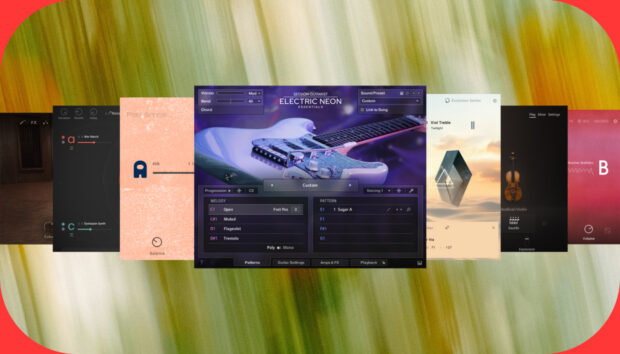
Where will your sound lead you? Explore the Native Instruments Summer Sale
Save 30% on instruments, effects, and sounds in our Summer Sale. Find the tools to keep your tracks moving and…