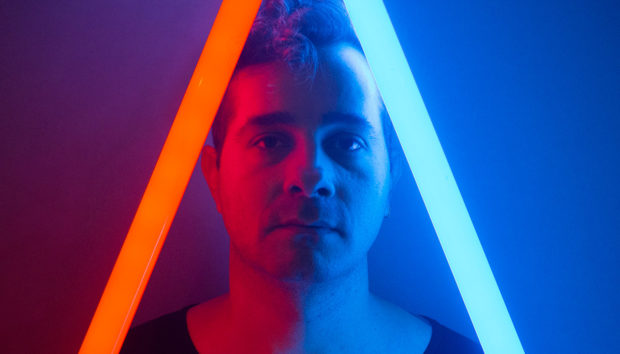
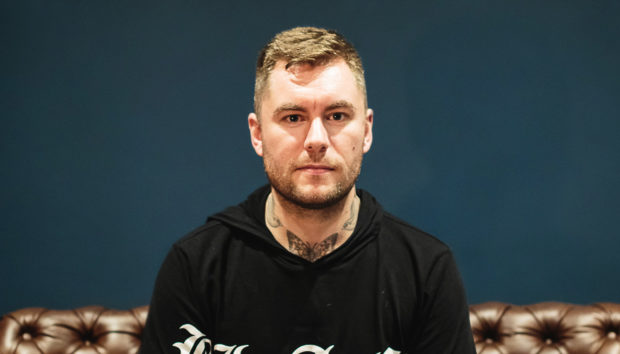



Tim McEwan of The Midnight approaches production like a craftsman, balancing the precision of modern software with the texture of older recording techniques.
For Syndicate, his most ambitious project yet, he built a workflow that connects classic warmth to contemporary punch. Plugin Alliance tools became a central part of that process, shaping the sound of the drums, bass, and stereo field while keeping the mixes open and musical.
Across seventeen tracks, Syndicate channels the drama of analog synths and cinematic arrangements through digital precision. McEwan’s use of compressors, enhancers, and tape-style saturation gave each track its own personality while keeping the entire album cohesive.
The result is a collection that feels both huge and intimate, detailed enough for headphones and powerful enough for a festival stage.
Jump to these sections:
- Building Syndicate with Plugin Alliance
- Core tools behind the record’s punch
- Managing width and stereo movement
- Using analog-style plugins for warmth
- Lessons for new producers from analog emulations
- Balancing mix tools and arrangement decisions
This interview unpacks how those plugins fit into his daily workflow, how he handles width and contrast in the mix, and what younger producers can learn from exploring these tools hands-on.
Syndicate is one of your most ambitious records yet. How did Plugin Alliance tools fit into the day-to-day process of building such a large-scale album?
The Plugin Alliance library is really deep and I have a lot of plugins from them.
I used ADPTR Sculpt on the drum bus for a lot of tracks. It functions as a one-stop shop in terms of doing parallel compression and treating the transients on the drums. Sometimes I even had it on the master bus just to gently compress everything and still control transients and maintain the punch, but bring up low-level stuff so it felt much more present and came to the forefront of the mix.

I love the SPL Transient Designer Plus. That one is such a clean and simple transient designer that I’ve used for many years. I also use the SPL Vitalizer MK2-T; that one functions as a really nice drive/saturation unit. I’ve used it on drum buses, kick drums, snare drums, and sometimes even on master buses very gently. And I love the Vertigo VSC-2 compressor.

That one is such a transparent compressor. I’ve used it on anything from vocals to synths to buses to basses. It can control peaks and just gently compress everything and tighten everything up, or just make sure everything is being controlled so you can bring up the main level and make everything feel a little more present. It’s very simple, it’s very clean, and it sounds fantastic.
Pro tip from Tim McEwan: Make your whole master bus mono during the mix. It will make it clear where things are muddy and clashing when everything is brought to the center.
Do you tend to reach for the same few plugins every time, or does it change from track to track depending on the vibe?
It tends to stay the same, but with this album I had more time and bandwidth to really dig into the mixes, and I had the luxury of being able to spend time on them.

So I was exploring a little bit more. I recently bought the True Peak limiter from bx through Plugin Alliance, and that one is a fantastic limiter. I’ve been on the hunt for different limiters and that one is a great all-around limiter. I use the bx_clipper too. I love clippers, and those are ones I constantly reached for.

I also have the enhancer, the bx_townhouse bus compressor, the Mäag EQ4 for that high “air” band, and the Acme Opticon compressor. The Acme Opticon is amazing on basses and anything that needs to really be controlled but also adds grit, dirt, and saturation to the signal.
I’ve got my classics that I go for, but I had a lot more time and bandwidth to explore on this record, which was really fun.
How do you handle width and space when stacking multiple synth layers, and do you think analog emulation plugins handle this job better than strictly digital versions of the same tools?
As someone who has always gone for a very wide, stereo-feeling mix, I throw chorus on almost everything. I love the width. I’ve begun to experiment more with having a couple of elements very dry and very mono to maintain contrast. If you have everything wide, you lose perspective.

So if you have everything wide and then one sound that’s straight mono and just cuts right through everything, that helps the mix; or vice versa — make a lot of things really dry, and then when you add one big pad that’s huge with shimmer reverb and chorus, suddenly your mix opens up and explodes in your ears in a good way. Playing with that contrast is very effective, and I’ve been doing it a lot more in the last couple of years.
Pro tip from Tim McEwan: Use soft or hard clipping before compression to slightly and transparently control transient peaks on drums, plucked guitars, or bass. Avoid soft or hard clipping on vocals.
When you’re balancing retro textures with modern polish, what role do analog-style plugins play in keeping that balance?
It’s a huge role. I often add tape saturation or tape emulation, like an uneven tape recorder, to add grit or dirt and make something feel lived in. Some sounds are very sparkly and clean and that’s how they need to sit in the mix, but for the bed of music and the foundation, I always want to add something that makes it a little dirtier, dustier, uneven, or a little wonky, because I think our ears respond to imperfections.
Everything has gotten so clean in the last 30 years with the digital revolution. We can do so many things, but I’m seeing everywhere in the music industry that we’re doing what we can to get back to sounds that are a little less perfect and a little dirtier — hiss, noise, imperfections. The ear and the brain are drawn to that, and it adds complexity in a way I love.
Pro tip from Tim McEwan: Use width/contrast: run chorus widely, but keep a few key elements dry and mono, or vice versa, so the wide moment “explodes.”
For younger producers who may never touch an analog desk, what can they learn from working with these emulations?
They can learn that you can use these plugins as tools to shape a sound.
The only way of learning is by doing – messing around with a plugin and really getting to know its personality: how it operates and how it reacts to certain signals and sounds. Every plugin, every compressor, every EQ, every saturation unit, every reverb – it’s all different, and everything acts and responds differently to what you throw at it. It becomes really fun when you understand the strengths and weaknesses of a given plugin so you have a broader array of tools.
I always try to mix up my tools. With synths I try to use different synths from different companies – Serum for one track, Spire for another, Diva, TAL, etc. You could use Serum for everything and it would sound great, but it’s all coming from the same machine and algorithm, adding the same type of color. If you mix it up, you clear yourself up for a cleaner mix because each company, each synth, each plugin adds a slightly different color, grain, and texture.
Your mix will thank you. Future you will thank you, because everything will have its own shelf in a different way.
Looking back at the sessions, how much of the final “glue” or “character” would you credit to mix tools in general versus the arrangement and performances themselves?
A huge part of the credit goes to the tools and the mixing process.
Since we started The Midnight, my skill set and knowledge about mixing have evolved a lot, and I understand the tools I’m using in a much better way now. I’ve become better at using them, and therefore it’s much more fun.
I always try to step back and ask what the role of a sound is and what it needs to accomplish, then figure out the best way to do that. If you have a bass that’s really spiky and has to cut through the mix, is it a combination of compression and then EQ? How much can we color it? How much can we bring out the personality of this synth or bass while staying true to its essence but making it sit on its own shelf in the mix? Everything is about creating a space for a particular sound. That’s mixing to me.
Pro tip from Tim McEwan: Add very subtle sidechain to most elements (not vocals) so kicks/snares stay punchy while you raise pads/keys without overpowering drums.

Wrapping it all up
McEwan’s mix philosophy revolves around curiosity and control. He treats every compressor, limiter, and EQ as a unique voice with its own personality. By learning how each reacts to transients and tone, he’s built a library of trusted tools that let him mix faster and more confidently.
For him, Plugin Alliance represents that balance between transparency and attitude. It helps him retain the emotion of a performance while still giving the production modern impact. As Syndicate continues to expand The Midnight’s creative world, his approach remains focused on clarity, movement, and authenticity.
Related articles
-
Behind the synth: A. G. Cook on stacked sawtooths and the creation of Super*Saw
Explore the extremes of stacked sawtooth waves with Super*Saw, a new synthesizer co-created with A. G. Cook. Learn how to…
-

Inside the evolution of orchestral sampling: an interview with ProjectSAM
Discover how ProjectSAM’s Lineage Series uses NKS and smart features to change orchestral sampling. Plus, save on instruments in our…
-

How New Constellations turn emotion into sound with Massive X
Go inside the studio with New Constellations. Learn how they use Native Instruments gear, happy accidents, and lifelong friendship to…
-
Citizen Kain on building emotion and space with Replika
Citizen Kain explains how Replika helped shape the rhythm, tension, and emotion behind his debut Eversun Records single “Moments.”…
-

The organic precision behind Calcou’s Anjuna release featuring Reaktor
Calcou shares how Reaktor, Monark, and Super 8 shaped the creative balance and live energy behind their new duo EP,…
-

14 NKS instruments that will change the way you create music
Discover 14 NKS instruments to freshen up your workflow. From lo-fi tape synths to cinematic strings, shop the Native Instruments…
-
Parallelle on crafting living basslines with Reaktor and TRK-01
Parallelle share how Reaktor and TRK-01 shape the bass and warmth in 11th Avenue, balancing analog depth with modern control.
-
Where will your sound lead you? Explore the Native Instruments Summer Sale
Save 30% on instruments, effects, and sounds in our Summer Sale. Find the tools to keep your tracks moving and…