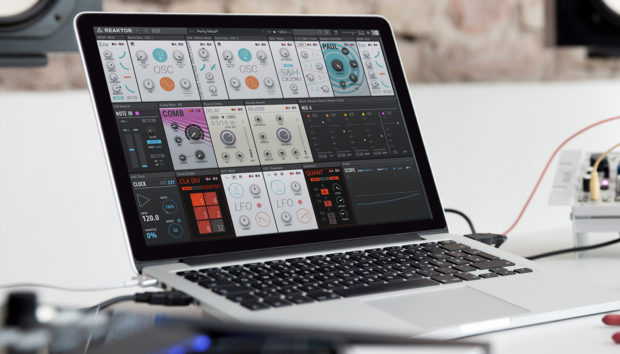


Dutch producer Corren Cavini has always written music that blurs the line between club energy and emotional storytelling. His debut album, A Place To Call Home, out now on Purified Records, refines that balance into a cohesive journey. Each track feels intentional, shaped by space, melody, and atmosphere rather than structure alone.
Built around his signature combination of live instrumentation and electronic precision, the album moves fluidly between introspection and movement. Central to that process were Kontakt and Raum, two tools that helped Cavini ground the record’s emotional core. From the warmth of Noire to the spatial clarity of Raum, every sound was chosen to build an environment that feels lived in.
Across twelve tracks, A Place To Call Home acts like a single narrative. It’s about what it means to build belonging through sound, and how technology can make that connection feel deeply human.
Below, Cavini walks through the creative process behind the record and how he shaped its emotional architecture through sound design.
Jump to these sections:
- Building emotion through instrumentation
- Kontakt as a foundation for feeling
- Placing sounds in space with Raum
- Letting the story guide the sound
- Balancing concept and intuition
- Looking ahead to new creative chapters
Kontakt, Raum, Noire, Session Strings 2, and many more creative instruments and effects are all available on the 360 Plus and Pro subscriptions.
Learn more about the 360 subscription
Download Corren Cavini’s custom Raum presets for free:
How did you approach sound selection to make sure the instruments reflected the emotional tone of A Place To Call Home?
It really depends from track to track, but overall, most of the songwriting began in a very stripped-down, honest form – just me behind a piano. That’s why the piano plays such an important role throughout the album. It’s where I lay the emotional foundation for songs. Sometimes that piano feels natural and clean, other times it’s more degraded or textured, depending on the story the track needed to tell.

From there, I would think deeply about what I wanted each track to feel like, almost as if I were scoring a story rather than producing a song. For example, in “Agoraphobia,” I wanted to combine the vastness of orchestral music with the melodic intensity of techno. That meant big synth energy paired with organic string arrangements. That’s why you hear strings, horns, and violas blending with more electronic textures.
On “Listen to the Silence,” on the other hand, I wanted something more trance-like and ravey, so the sound design leaned toward those club-driven tones. And with pieces like “Autumn Sun,” the sounds are unapologetically big. These are the kinds of sounds you’d associate with powerful dancefloor moments. It all comes from asking: what emotion am I trying to express? For me, that emotional storytelling is the cornerstone of everything I write.
Pro tip from Corren Cavini: Save your unused ideas. A sound that doesn’t fit one track might be perfect for another. Creativity isn’t linear. It’s a long conversation with yourself.
Which tracks on the album relied most heavily on Kontakt libraries like Noire and Session Strings 2?
Noire is woven throughout the album. Since so many of the tracks start at the piano, that sound became a natural foundation. The emotional depth and slight imperfections of Noire make it such a human instrument to write with. I’ve found it usually sounds better than a live recorded piano.

You can really hear it in “Valinhos,” where the piano progression is at the heart of the track, and in “Home,” the opening piece, where Noire defines the aesthetic from the start. It’s also a key element in “Agoraphobia,” where the piano helps balance the cinematic strings and synths.
Meanwhile, Session Strings 2 comes in for tracks that require a more orchestral, emotive layer. In “Agoraphobia,” again, it was essential to achieve that combination of electronic drive and classical depth. “Never The Same” also features strings that carry a lot of emotional weight.
The key to making the stabs in “Agoraphobia” sound so big lies in the layered harmonies. Just like an orchestra achieves power through many skilled musicians playing together, the track stacks multiple complementary melodies using several instances of Session Strings, enhanced with a few supporting sounds.

For a large, real-sounding string orchestra, it is essential that harmonic layering is not just a matter of copying the same MIDI clip into multiple instruments. I try to get into the mindset of an orchestral arranger, listening thoroughly to which notes should be played by which instrument.
For instance, the cellos and double basses play the low notes in two octaves, while other cellos and violas respond with a line that begins a minor third above the bass notes.
So, if I had to highlight the main Kontakt-driven moments, it would be those tracks. These libraries really helped shape the emotional palette of the album.
Pro tip from Corren Cavini: Make presets your own. Presets are fine for inspiration, but always tweak, layer, or combine them in unexpected ways to create something uniquely yours. “Agoraphobia,” for example, blends big melodic synths with cellos and horns.
How did Raum help you create a sense of space that works across different playback systems?
Raum is one of my favorite reverb plugins, and I use it to place sounds in a space. It can make those sounds feel cohesive, as if they’re coming from the same room. In every track on the album, I have a reverb bus on a return track in Ableton. I use it to simulate a smaller, natural-sounding room with a short decay. Most of my drums are sent there in varying amounts, so they share the same reflection characteristics, which helps them feel cohesive.

I usually have another reverb bus for more spacious sounds – for example, in the opening track “Home,” which has a very open, airy feel. That one might have a decay time between two and four seconds to create more depth.
When it comes to headphone listening versus club playback, I don’t necessarily design separate versions. I start by writing music meant to be listened to, and then I might slightly adapt it for club play.
In a club, too much reverb can make things feel washed out since the room already adds reflections, so I’ll tighten it up a bit. Overall, I try to find a middle ground – especially since A Place To Call Home transitions from more spacious, emotional tracks in the first half to more direct, club-oriented ones in the second.
Because of that, all of the tracks are written and mixed for a middle ground between the home listening and club-ready side. Finding the right balance in that aspect was probably the biggest mixing challenge on the album.
Pro tip from Corren Cavini: Work with people who believe in your vision. Collaborate only with those who genuinely connect with your project and won’t try to mold you into something it’s not.
How do you decide when a sound serves the story versus when it’s cool but unnecessary?
I love sound design, so I constantly experiment with new ideas. Sometimes I’ll have 20 different sound concepts in one session. But a track with 20 competing ideas is just too much. So I go through an iterative process. I build ideas up and then strip them back, keeping only what truly serves the track.

There are always cool sounds that don’t make it into the final mix, but I never delete them. I save everything. Quite often, an idea that didn’t fit one track will find a perfect home in another project. Maybe that’s months or even years later.
With A Place To Call Home, much of the process involved refining details until everything felt cohesive. If a sound doesn’t support the story or emotion of a track, it will often find a place in a new track further down the road.
With how easy it is to save and load not only presets, but full instrument tracks nowadays, I’ll sometimes even use elements from tracks I wrote years ago that didn’t make the cut. That’s why I work on new music almost every day. Even if I’m not feeling inspired, the results of a day’s work will always reward me later. When inspiration does strike, I can let the idea come to life very quickly because I can use sounds, drum grooves, and other elements from unfinished tracks.
Pro tip from Corren Cavini: Don’t rush your process. Dedication and patience lead to growth, both creatively and in terms of building an audience.
What advice would you give to producers about using sound design to support storytelling in music?
I think many producers fall into the trap of chasing “cool” sounds without considering what emotions those sounds are intended to convey. I’ve seen it a lot with students and even in my own early work – being focused on the technical side, trying to make the biggest, cleanest drop or the most complex patch. But if the sound doesn’t serve a story or feeling, it doesn’t really say anything. For me, every sound should reinforce the emotion you’re trying to communicate.

Start by asking: what do I want this track to evoke in people? That one question can guide everything – the harmony, the sound design, the space you create, even the mix. If you’re led by a story or emotion, the technical side becomes intuitive, because your choices have purpose.
On the other hand, if you’re just following trends or recreating another artist’s sound, your music might be impressive, but it probably won’t connect deeply. Listeners don’t respond to perfection, they respond to honesty.
Pro tip from Corren Cavini: Avoid chasing trends. Authenticity builds lasting connections. If people connect with you and your sound, that bond will endure beyond whatever’s trendy right now and might be gone in two years.
Has working on A Place To Call Home changed how you’ll approach tool selection for future albums?
I think the album mostly confirmed that I was on the right path. The big transformation happened before this album. It was a long process of finding confidence in my sound and figuring out which tools truly feel like me. I only wanted to start the album when I was certain about how I wanted it to sound and feel.

That doesn’t mean my next album will use the same palette. It probably won’t at all.
But I’ve become very confident in my process: knowing how to identify what a piece of music needs to express and how to get there sonically. Now that this album is done, I feel creatively open again. Maybe I’ll go in a completely different direction – something raw and analog, or something entirely orchestral and ambient.
What won’t change is that everything I make will continue to be guided by emotion and authenticity. I love how open and free it all feels right now.
Pro tip from Corren Cavini: Let the story lead the sound. Technical skill matters, but start from the emotion or story you want to tell. The right tools and techniques will follow naturally if you work hard on perfecting your craft.
Wrapping it all up
Each song on A Place To Call Home feels like a chapter in an ongoing story, shaped by careful sound design and honest emotion. Corren Cavini’s approach combines technical precision with a deep narrative focus, utilizing tools like Kontakt and Raum to seamlessly blend the warmth of acoustic instruments with the spatial depth of electronic production.
His workflow shows that modern melodic music doesn’t need to choose between complexity and humanity. It can do both as long as every sound has a purpose.
A Place To Call Home is available now on Purified Records.
Don’t forget to download Corren Cavini’s custom Raum presets for free:
Related articles
-
How to write moving, emotional melodies in 5 steps
Learn to write moving melodies in 5 steps. From motifs to sound design with NI 360 Essentials, master evocative songwriting…
-
Afro house production 101
Learn how to make Afro house with groovy drums, evolving basslines, and Afro house production tips using Massive X and…
-
The best lo-fi plugins for making beats
Discover the best lo-fi plugins for making beats, from free emulation tools to pro sounds. Explore top lo-fi effects, synths,…
-
Statement from Nick Williams, CEO of Native Instruments
Native Instruments provides an update on its recent restructuring process.
-
How Massive helped Johnny Gorillas shape two creative worlds
Johnny Gorillas shares how mastering Native Instruments Massive shaped his solo work and his work with mono sky, creating consistency…
-
The best sound design plugins from Native Instruments
Discover the best sound design plugins for music, film, and games, including top synths, effects, and creative tools from Native…
-

Taming the monster: behind the soundtrack of K-Pop Demon Hunters
Discover how GRAMMY-nominated engineer Curtis Douglas and producer Lindgren used iZotope Ozone, RX, and Kontakt to craft the high-impact, polished…
-

The best DJ effects: a complete list for beginners and pros
Discover the best DJ effects for every mix, from essential filters and delays to creative tools like the Beatmasher. Learn…