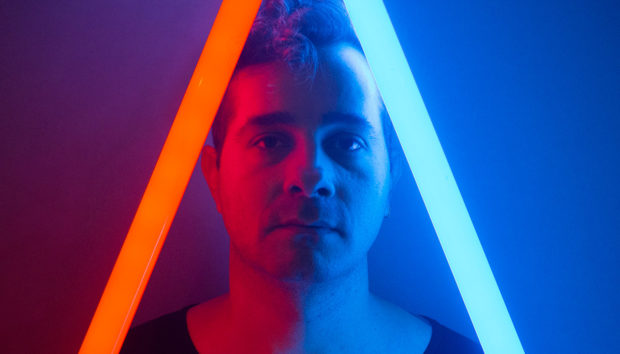


corto.alto’s new single “31.Bleep (01)” captures the subtle side of groove – the way a kick pattern or bass shift can pull you deeper into a track without announcing itself. Built around instinct and micro-adjustments, it reflects the same mindset that’s shaped his path from the jazz conservatory to the underground beat scene.
Komplete has been a quiet but steady part of that evolution.
Even with a background rooted in live performance, corto.alto leans on Kontakt libraries, Massive, and NI synths to sketch quickly, build harmonic layers, and lock in ideas before they get overthought. It’s not about replacing players – it’s about keeping momentum without losing feel, blending real-world musicianship with the fast, intuitive tools that make beat-making flow.
In this interview, corto.alto shares how Komplete helped shape his first album Bad With Names, how he keeps digital sounds feeling alive alongside live players, and the production habits that let spontaneity stay at the front of the process.
Jump to these sections:
- How Komplete helped corto.alto bridge jazz and beat production
- Why Kontakt libraries are key for fast sketching and arrangement
- Techniques for humanizing digital layers alongside live recordings
- The role of Massive and sound design in his workflow
- Pro tips on saturation, randomization, and trusting instinct over rules
Stick around for real-world advice on balancing live feel with production speed – and why the right tool is the one that keeps the idea moving forward.
You’ve got a serious jazz background – when did Komplete start becoming part of your creative process?
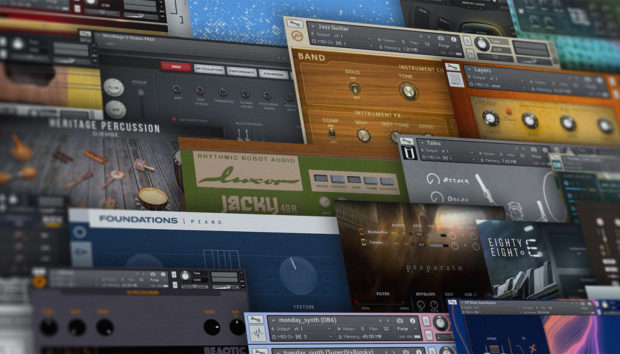
I’ve been making beats since I was 15, mostly using Logic Pro and Ableton. My introduction to jazz came through the samples in the music I was listening to, mostly 90’s hip hop like A Tribe Called Quest and, of course, J Dilla. A few years ago, I began using Kontakt libraries for the first time, primarily to quickly express my ideas and explore the various synths and sounds.
The synths available within Komplete were a huge factor in pushing my sound forward, and they’ve become standard in my music, especially on my first album Bad With Names. There’s a huge range of textures and sounds in Komplete that allow me to create ideas that would otherwise be difficult to capture quickly with hardware synths and acoustic instruments.

Also, it’s super fun to hear your arrangements on the instruments they are intended for before you replace them with real recordings – it helps me inform my arrangement so much better, hearing an excellent version of that instrument. (Shoutout Session Horns Pro Kontakt library)
Pro tip from corto.alto: Mix quantized and non-quantized instruments to add human-like variation to your tracks.
How do you keep spontaneity and feel alive when you’re working inside a DAW with tools like Komplete?
The challenge for me in a DAW is striking a balance between control and spontaneity.

I try to stay open to inspiration from anything – sometimes it’s a single note from a synth or a new snare sound I’ve found. That initial idea can often set the direction for a new track, and I try not to overthink why. The key for me is to push the concept as far as I can, letting it evolve before deciding on the next step.
The vast variety of sounds in libraries/VSTs like Komplete makes it easier to experiment with different textures and sounds, and it’s fun to explore when you get stuck using the same sounds.
Pro tip from corto.alto: Use drum triggers on your snare and kick for heavier drum sounds.
Do you find Kontakt libraries useful for replacing live parts, or more for building out layers that support them?
I typically begin by utilizing Kontakt libraries to create demos.
They give me a chance to hear what I’m working with and visualize the structure of a track. In many cases, I’ll later replace those virtual instruments with real recordings, but often the library sound works perfectly as is, especially for synths/drum machines.

Although I mostly re-record horns, A VST’d horn can sometimes sit in a section if I don’t have access to a full horn section at the time. It’s really about practicality and efficiency – if it fits the vibe and sounds good in the mix, I don’t feel the need to re-record every part.
The Kontakt library helps me quickly capture my ideas and refine them, which keeps the momentum going in my creative process.
Pro tip from corto.alto: Experiment with chopping up live drum recordings to give them a more digital texture.
How do you make sure your tracks still feel human and expressive, even when the source sounds are digital?
While I do use live instruments 80-90% of the time in my tracks, VSTs still play a huge role in filling in the gaps.
To keep things feeling human and sitting well with live instruments, I usually tweak the virtual instruments to make them less perfect – slight timing and tuning shifts, changes in velocity, etc.

Those small details can make a huge difference in making digital sounds feel more organic, especially when I’m using both VSTs and live instruments in a horn section for example. I really used to over-quantise everything too, and learned the hard way on that – it always sounds so much better to only quantise if necessary in my opinion.
And I sometimes try to inject a bit of randomness or weird glitchy errors where it feels right. Since the digital tools are so easy to use, it’s sometimes tempting to just record them and leave them – but if you treat them with the same scrutiny as you would with a live instrument, I feel like that’s a better approach.
That’s why I usually bounce all my MIDI out to audio as soon as I’m happy with the source sound.
Pro tip from corto.alto: Saturate your sounds! I love saturation and I use it everywhere. I overdo it sometimes. However, it’s a great effect to add character to otherwise boring sounds.
What’s one underrated technique you’ve picked up when blending real instruments with Komplete-based layers?
One thing I’ve learned is that sometimes people won’t even know it’s a VST unless you tell them.

If it sounds good in the mix, it’s good!!
For someone coming from a live music background and stepping into production, where would you tell them to start with Komplete?
If you’re coming from a live music background, mainly if you are used to stage pianos, etc., I’d recommend starting with Massive. It’s a highly versatile synth with a user-friendly UI, making it ideal for beginners in production. It covers a lot of ground sonically, for me anyway.

Clicking through the presets is a great way to learn and get familiar with the different sounds that are possible.
Pro tip from corto.alto: Don’t listen to people who say you NEED to use an EQ or compressor in a specific way for a particular instrument. Your sound source will always be different. Learn to listen and make judgments based on that. Make music with your ears, not your eyes!
Wrapping it all up
Big thanks to corto.alto for breaking down how he keeps his process moving without losing the heart of it. The way he uses Komplete – whether it’s laying down Kontakt sketches, shaping sounds with Massive, or stacking live horns with VST textures – is inspiring because it’s all about getting the idea down fast enough that it still feels alive when he builds around it.
“31.Bleep (01)” shows exactly how that plays out in real time in the studio. It’s loose but intentional, layered without feeling overworked, and driven by the kind of instincts that come from trusting your ears more than your tools.
For anyone figuring out how to balance musicianship with production, the reminder’s simple: speed matters. Feel matters more. And whatever keeps both intact is worth building your process around.
Related articles
-
Behind the synth: A. G. Cook on stacked sawtooths and the creation of Super*Saw
Explore the extremes of stacked sawtooth waves with Super*Saw, a new synthesizer co-created with A. G. Cook. Learn how to…
-

Inside the evolution of orchestral sampling: an interview with ProjectSAM
Discover how ProjectSAM’s Lineage Series uses NKS and smart features to change orchestral sampling. Plus, save on instruments in our…
-
How New Constellations turn emotion into sound with Massive X
Go inside the studio with New Constellations. Learn how they use Native Instruments gear, happy accidents, and lifelong friendship to…
-
Citizen Kain on building emotion and space with Replika
Citizen Kain explains how Replika helped shape the rhythm, tension, and emotion behind his debut Eversun Records single “Moments.”…
-

The organic precision behind Calcou’s Anjuna release featuring Reaktor
Calcou shares how Reaktor, Monark, and Super 8 shaped the creative balance and live energy behind their new duo EP,…
-
14 NKS instruments that will change the way you create music
Discover 14 NKS instruments to freshen up your workflow. From lo-fi tape synths to cinematic strings, shop the Native Instruments…
-
Parallelle on crafting living basslines with Reaktor and TRK-01
Parallelle share how Reaktor and TRK-01 shape the bass and warmth in 11th Avenue, balancing analog depth with modern control.
-
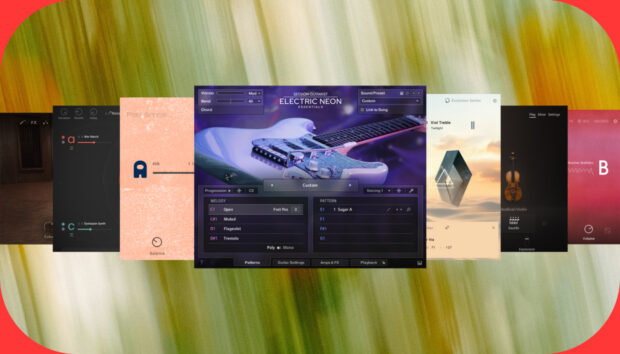
Where will your sound lead you? Explore the Native Instruments Summer Sale
Save 30% on instruments, effects, and sounds in our Summer Sale. Find the tools to keep your tracks moving and…