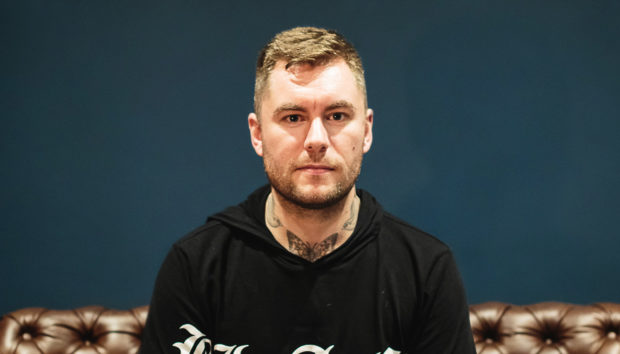



RE\MIND’s latest single with JK is built around a rare Os Tincoãs sample, but the track doesn’t rely on nostalgia to carry its weight. “Choro” is textured and contemporary, balancing stripped-down groove with just the right amount of emotion. As the second release on JK’s new imprint Titanic’s End, it captures a community-driven energy that’s both local and global, shaped by the legacy of Black Rock City and a desire to create timeless music with intention.
What makes the track unique is how RE\MIND weaves in cinematic tools like Pharlight and Noire without pulling focus from the source material.
The Os Tincoãs sample remains embedded in the soul of the production, but everything around it is sculpted to add subtle emotional weight. It’s the kind of writing you don’t always see in Afro house, which is part of what sets this release apart from others in the space.
Jump to these sections:
- Choosing cinematic vs. raw
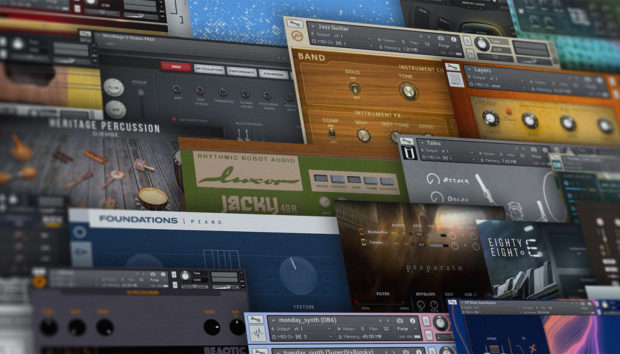
- RE\MIND’s favorite Kontakt libraries
- Layering Kontakt with hardware
- Kontakt as a creative spark
- Honoring cultural samples
- Shaping a unique identity
In this interview, RE\MIND breaks down how he integrates Kontakt into his sound, what it means to preserve the spiritual core of a track, and why libraries like Pharlight and Straylight continue to shape his creative identity.
How do you decide when an Afro house track needs a cinematic layer versus keeping it raw and percussive?
For me, it always begins with the emotional direction of the track. Some productions are meant to stay raw and groove-driven, while others demand a deeper sense of storytelling. With “Choro,” for example, I wanted to stay true to the feeling of the Os Tincoãs sample, which touched me on a very personal level. That track did not need heavy cinematic layering because the rawness and soul of the sample already carried the story.

At the same time, cinematic writing is a huge part of who I am as a producer. I often turn to Kontakt when I want to establish a strong emotional foundation, whether that comes from drones, evolving atmospheres, or expressive pianos. In tracks like “Nobody,” “1995,” or “Look Around You,” those cinematic layers become essential to shaping the overall mood while still keeping the energy needed for the dancefloor.
The decision always comes down to feeling. If the emotion I want to express calls for depth and immersion, I use Kontakt libraries to create textures that elevate the groove into something more cinematic. My music is rarely driven purely by percussion. The drums are there to accompany the journey and make the music feel alive rather than dominate it. When the focus leans toward rhythm, I make sure the groove supports the atmosphere so that the emotional layers remain at the core of the track.
Which of the cinematic libraries like Straylight, Noire, or Circles have become most central to your Afro house productions?
Straylight and Pharlight often play a central role in my productions because they allow me to create strong textural and atmospheric foundations. A lot of the time, I will begin a track by looping a drone from these libraries and then improvising chords or melodies on top. This gives me an immediate cinematic backdrop that guides the mood of the piece before I even start thinking about rhythm.
A good example is my track “Nobody,” where you can clearly hear a vocal drone from Pharlight forming the foundation, with my chord construction layered on top to build the emotion of the piece.

Noire is another library that I deeply value, and it appears in many of my productions. Beyond the beauty of the piano itself, what inspires me most are the creative parameters, such as the Color control and the Tonal Depth. I use the Color knob as a way to shape the progression of a track. During peak moments, I like to open it up, which brightens the piano and makes it feel stronger and larger. In softer moments, such as breakdowns, I close it down, creating a more intimate and warm sound. It is a very expressive tool because it allows me to play with dynamics in a natural way.
I think it’s much more organic than simply automating a filter, since the change comes from within the piano itself rather than from an external effect. The Tonal Depth also adds something truly unique, bringing richness and dimension that make the piano sound almost three-dimensional.
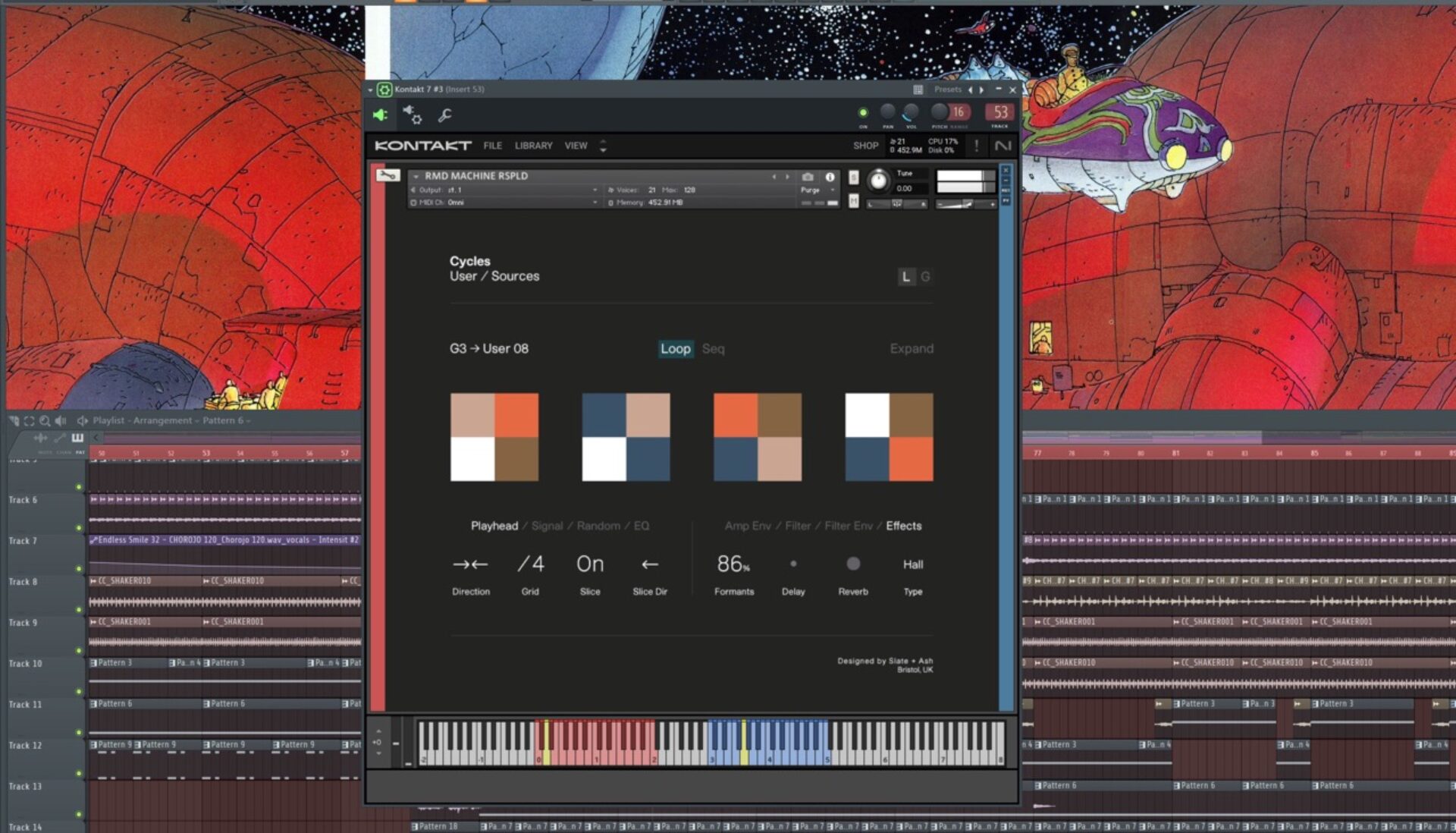
I also use Slate + Ash Cycles to create unique textures. What I love about this instrument is the possibility of importing my own samples and transforming them into something entirely new. It allows me to take sounds that may be familiar and reshape them until they feel like part of a personal sonic universe.
This method of sound design adds a strong cinematic character to my music in general while keeping it distinctive, since the textures are always evolving and never predictable.
Do you layer Kontakt sounds with hardware, or do you keep them distinct in the mix?
When I use Kontakt libraries, I rarely keep the sound in its raw form. I like to take a basic sample and process it until it becomes almost unrecognizable. Sometimes I completely destroy it with plugins, or I resample and stretch it directly in the DAW to create entirely new textures. I also love using tape and cassette-style effects, as well as lo-fi processing, because they bring a nostalgic character that runs through much of my music. This approach allows me to turn something familiar into a sound that feels personal and unique to my productions.

One of my favorite hardware tools for this is an effects pedal I use all the time to create beautiful granular layers. In my track “1995,” you can hear it on top of the piano, transforming it into an evolving pad that adds depth and emotion.
I also enjoy blending synthetic basses with more organic layers from Kontakt, amplifying them together to create a low end that feels rich and alive. For me, the magic happens when hardware and Kontakt sounds merge seamlessly, because that fusion of digital and organic is what gives my tracks their personality and emotional weight.
It is also very important for me to develop my own sound identity, and I am always searching for tones that no one else has. Arthur Joly, a genius Brazilian artist, built me a custom synthesizer that I use extensively. It is extremely difficult to control, almost impossible at times, because it behaves in such an unpredictable way, but I love that randomness and imperfection. Unlike most commercial synths, it constantly surprises me, and I often use it to create effects, textures, and sound design elements that feel truly personal and unique.
How often do cinematic libraries spark the initial idea for a track versus supporting an idea you already had?
Sometimes I open Kontakt without any clear plan, just to experiment and see where the sounds take me. It is often a texture, a drone, or even a single evolving sound that can spark the entire direction of a track. This workflow is very instinctive and based on experimentation, and I find that it often leads me toward ideas I would not have reached if I had started with rhythm or a structured progression.
Other times, I begin with a more defined idea, like a sample, a chord progression, or a groove. In those situations, the cinematic libraries become supporting elements that add personality and uniqueness.
They also play a big role when I face creative blocks. If I feel stuck, opening Kontakt and exploring its sounds almost always gives me fresh inspiration. The sheer variety of textures and atmospheres helps me break free from repetitive patterns and find a new emotional direction. In that sense, cinematic libraries are not only tools for production but also a way of keeping my creativity alive.
How do you balance cultural references like the Os Tincoãs sample in “Choro” with the more global sound of Kontakt instruments?
From the start, my goal was to create music that feels both timeless and modern. Being a big fan of the original recording, my first intention with “Choro” was to respect the material as much as possible while injecting my own style and personality. My aim was never to change what made the song so powerful, but rather to amplify the elements I loved, such as its groove, its warmth, and its unforgettable chorus. I wanted to craft a version that felt fresh for the summer and could work in a club setting, while still honoring the soul of the original.

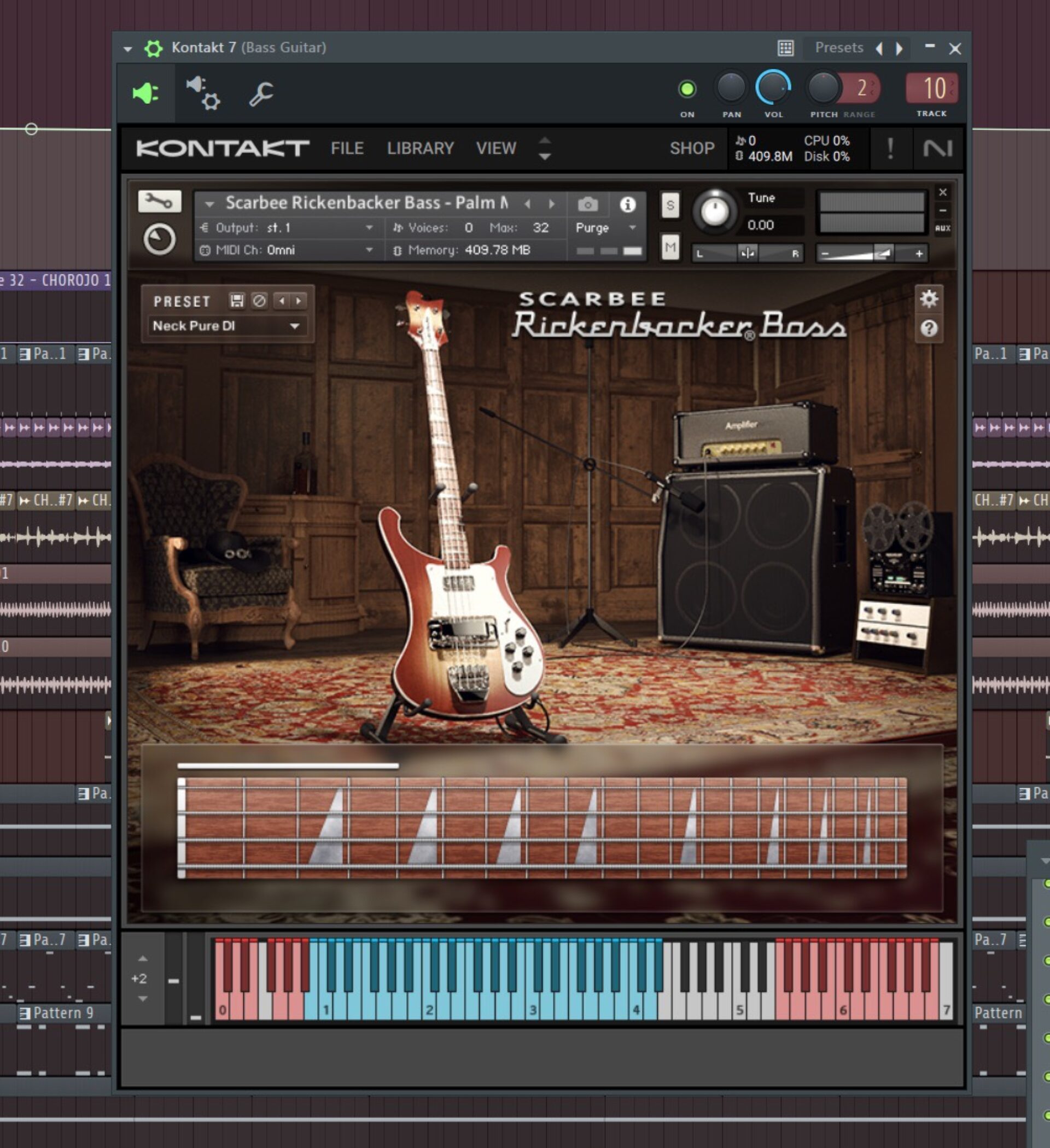
To achieve this balance, I used Kontakt instruments as a way to extend and enrich the sample without overpowering it. I added a bassline from Kontakt, which gave the track a strong and moving low end that locked in perfectly with the groove. I layered additional percussion to heighten the rhythmic energy, and I introduced depth with a piano that added more emotional weight. These touches allowed me to bridge the world of Os Tincoãs with the global textures that define my own sound.
Has integrating cinematic libraries shaped your identity as an Afro house producer?
I would not describe myself strictly as an Afro house producer, because I do not like being confined to a single genre. I see myself first and foremost as a music producer guided by emotion rather than by style. Since I started making music around the age of 12 or 13, I have always been drawn to connecting cinematic sound design with electronic music. That fusion has been a fundamental part of me from the beginning, and it continues to define my creative path today.
Kontakt has helped me realize that vision by giving me the tools to explore instruments and textures in a way that feels natural inside electronic productions. It taught me how to compose for pianos, strings, brass, or atmospheric layers and integrate them seamlessly into an electronic context. Through these libraries, I was able to strengthen my sense of musical storytelling and expand my palette beyond beats and grooves. This opened doors to a broader vision of composition, and it is also why writing music for picture is something I would love to do one day.
I take a lot of inspiration from artists who have bridged these worlds successfully. Tangerine Dream, Giorgio Moroder, Daft Punk, M83, or Gesaffelstein have all proven that electronic music can carry the same emotional and narrative weight as traditional film scores. They created works that stand alone as powerful albums but also translate perfectly into cinematic universes. That blend of electronic energy and storytelling ambition is exactly what I aspire to in my own music.
Wrapping it all up
“Choro” opens the first chapter for Titanic’s End Records with intention and depth. The collaboration between RE\MIND and JK draws from Afro-Brazilian traditions, layered percussion, and emotional instrumentation shaped through Kontakt, blending these elements into a piece built for both movement and meaning.
As the label moves forward, this release sets a tone rooted in cultural awareness and personal expression. It reflects a growing space for producers who use their tools not only for texture and rhythm but to carry emotional weight with clarity and purpose.
Cinematic instruments like Pharlight and Straylight both run in Kontakt Player. Get your copy for free now to experiment with your own epic textures.
Related articles
-
Behind the synth: A. G. Cook on stacked sawtooths and the creation of Super*Saw
Explore the extremes of stacked sawtooth waves with Super*Saw, a new synthesizer co-created with A. G. Cook. Learn how to…
-

Inside the evolution of orchestral sampling: an interview with ProjectSAM
Discover how ProjectSAM’s Lineage Series uses NKS and smart features to change orchestral sampling. Plus, save on instruments in our…
-
How New Constellations turn emotion into sound with Massive X
Go inside the studio with New Constellations. Learn how they use Native Instruments gear, happy accidents, and lifelong friendship to…
-
Citizen Kain on building emotion and space with Replika
Citizen Kain explains how Replika helped shape the rhythm, tension, and emotion behind his debut Eversun Records single “Moments.”…
-

The organic precision behind Calcou’s Anjuna release featuring Reaktor
Calcou shares how Reaktor, Monark, and Super 8 shaped the creative balance and live energy behind their new duo EP,…
-
14 NKS instruments that will change the way you create music
Discover 14 NKS instruments to freshen up your workflow. From lo-fi tape synths to cinematic strings, shop the Native Instruments…
-
Parallelle on crafting living basslines with Reaktor and TRK-01
Parallelle share how Reaktor and TRK-01 shape the bass and warmth in 11th Avenue, balancing analog depth with modern control.
-
Where will your sound lead you? Explore the Native Instruments Summer Sale
Save 30% on instruments, effects, and sounds in our Summer Sale. Find the tools to keep your tracks moving and…